
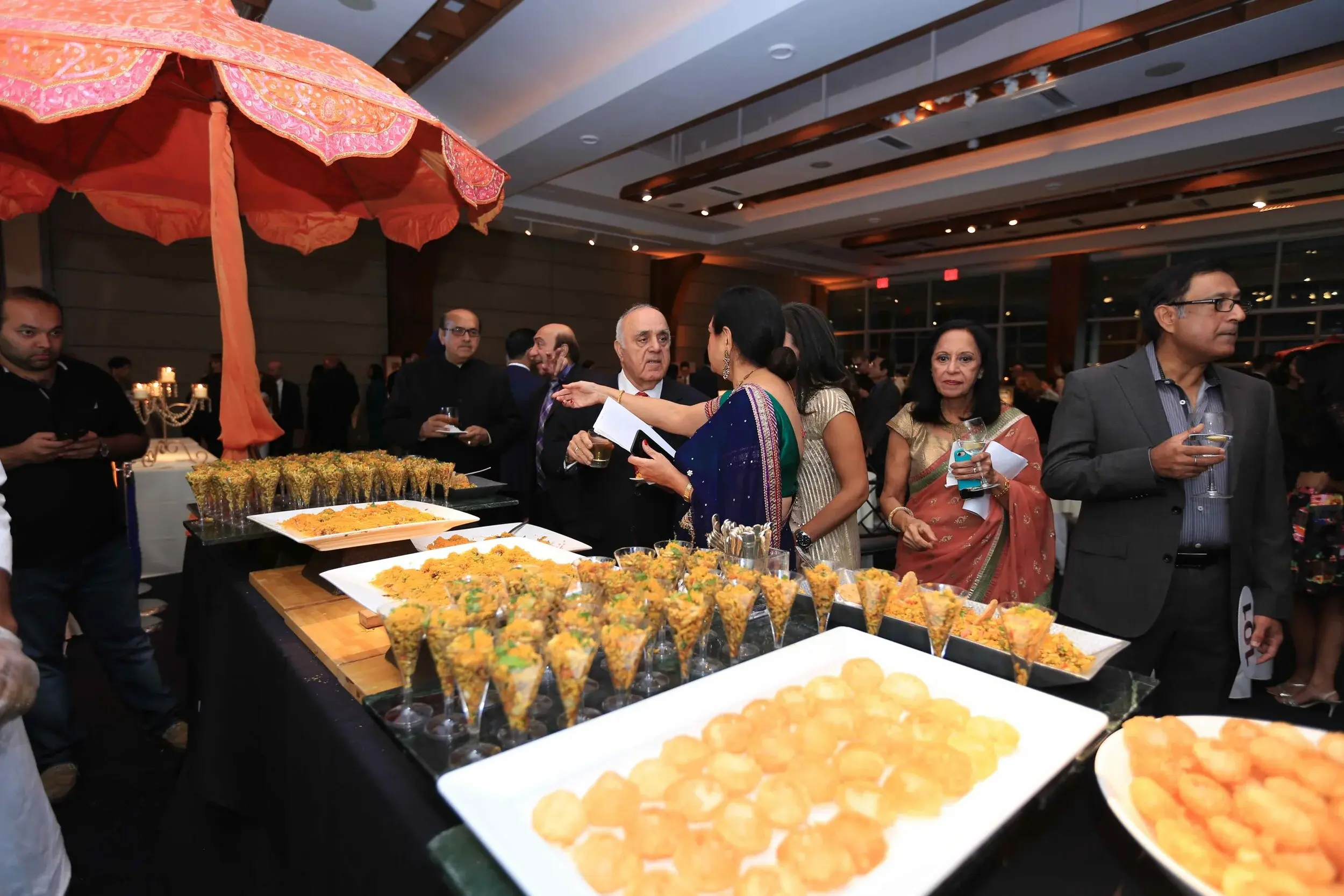
Live Chaat and Live Tandoor can both turn food service into part of the event, but they create different experiences. Chaat encourages guests to browse, customize, and return for another combination. Tandoor puts heat, aroma, and grilled food at the centre of a more substantial menu. The right choice is the one that fits the role of the food, the serving window, and the venue—not simply the station that looks most dramatic.
This comparison uses Mehfill’s current Live Chaat and Live Tandoor package details. Rates are in Canadian dollars before HST and are starting points for the listed package framework. The written quote controls the final menu, staffing hours, equipment, venue requirements, and availability.
The practical comparison
| Decision | Live Chaat | Live Tandoor |
|---|---|---|
| Current starting rate | C$50 per person | C$65 per person |
| Published menu framework | Pani puri, bhel puri, samosa chaat, aloo tikki chaat, one light dessert, and one beverage | Three tandoor selections, one biryani, one light dessert, and one beverage |
| Best planning role | Social grazing, arrival, cocktail-style movement, or an interactive food moment | A fire-led feature that can carry more of the meal |
| Minimum | 25 guests | 25 guests |
| Shared operating terms | C$100 total transportation, setup, teardown, and equipment fee; separately billed staffing; venue and fire approval confirmed for the event | |
The “best planning role” row is a decision aid, not a rule. A chaat package can be important enough to lead an event, and tandoor can be one feature within a larger menu. What matters is how the station fits everything else being served.
Choose based on what guests should experience
Live Chaat: choice, conversation, and repeated visits
Chaat works especially well when the event calls for movement and interaction. Four distinct chaat preparations give guests recognizable options without turning the station into an unlimited custom-menu promise. The combination of crisp, soft, tangy, sweet, and spicy elements can make the station feel active even when the rest of the event is relaxed.
Because guests may pause to choose and watch a dish come together, the queue itself needs room. Think about where people enter the station, where they receive food, and where they move next. A beautiful station placed in a narrow passage can create a poor experience.
Live Tandoor: aroma, theatre, and a fuller meal role
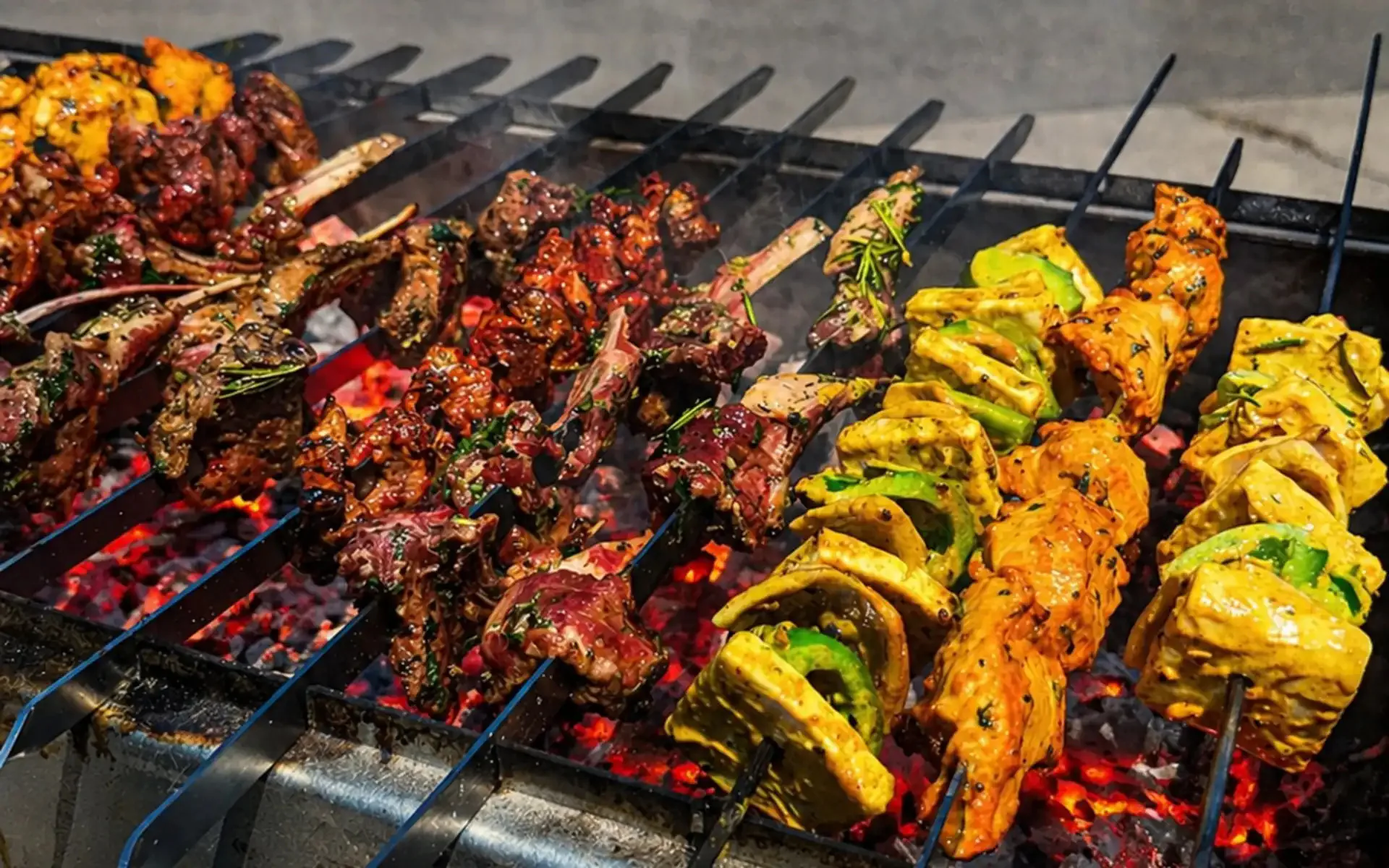
The published Tandoor package includes three grilled selections, a biryani, a dessert, and a beverage. Vegetarian tandoor options include tandoori mixed vegetables and paneer tikka; listed non-vegetarian choices include chicken tikka, malai kebab, hariyali kebab, tandoori chicken, chicken seekh kebab, and tangdi kebab. The final three selections are confirmed in the order.
Tandoor service brings additional venue questions because the confirmed cooking setup must be permitted and safely placed. Mehfill supplies the tents, tables, and tandoor for approved live or BBQ events; the client secures venue and fire approval. Fuel, ventilation, access, and other site-specific details are resolved in the written event plan rather than assumed online.
Price the whole experience, not only the per-person rate
For either package, start with the published per-person rate. Then account for the C$100 total live/BBQ transportation, setup, teardown, and equipment fee. Staffing is separate at C$18 per staff member per hour before HST, with a three-hour minimum per person and no billed travel time.
Every live or BBQ event uses a standard team of five service staff and two cooks. Two more service staff are added when the guest count is above 100. Service normally runs for two to three hours. These are operating facts, but they are not a final quote: actual billed hours, any event-specific equipment, menu changes, and HST still need to be confirmed.
Check flow and capacity before choosing
Mehfill uses an estimated planning throughput of 60–70 guests per hour per station. It is an estimate, not a guarantee. A concentrated rush of 100 guests is different from 100 guests arriving over two hours, even though the headcount is identical. Menu complexity, seconds, guest questions, and the position of the station can all change the real pace.
Each station also needs approximately 40 square feet as an early planning allowance. That figure helps start the venue conversation; it does not replace a site-specific layout. Use the live-station capacity planning method to compare your guest count with your actual serving window.
Live chaat for an office Diwali celebration
For a workplace celebration, compare the station with the length of the break and the room available for queues. Our office Diwali catering ideas show how a chaat gathering differs from a buffet lunch or labelled meals. Use the Diwali office catering page to connect the format to a date, menu and event quote.
When a combined plan makes sense
Some events may benefit from chaat during arrival and a more substantial menu later. That does not automatically mean booking both full live packages. A combined request has to be reviewed for menu overlap, service timing, equipment, staffing, floor space, and budget. Ask for the experience you want guests to have, then let the quote define what can be delivered responsibly.
What to include in the enquiry
- Event date and full venue address
- Estimated guest count and the hour when most guests will want food
- Indoor, outdoor, or mixed setup
- Whether the station is the main meal, an arrival feature, or one part of a larger menu
- Vegetarian, vegan, Jain, halal, nut-aware, and other dietary needs
- Venue rules, loading window, and the contact who can confirm fire or cooking approval
If the experience sounds right but the choice is still unclear, send those details through the live catering quote form. Mehfill can compare the two formats against the actual room, schedule, and menu rather than forcing the event into a generic answer.
Sources and planning references
- Mehfill Live Catering packages and current operating terms
- Mehfill delivery, setup, staffing, and service policies
- Mehfill live catering venue-requirements guide
Buffet packages updated October 10, 2026. Other operating facts checked August 26, 2026. Final event terms are confirmed in writing.