
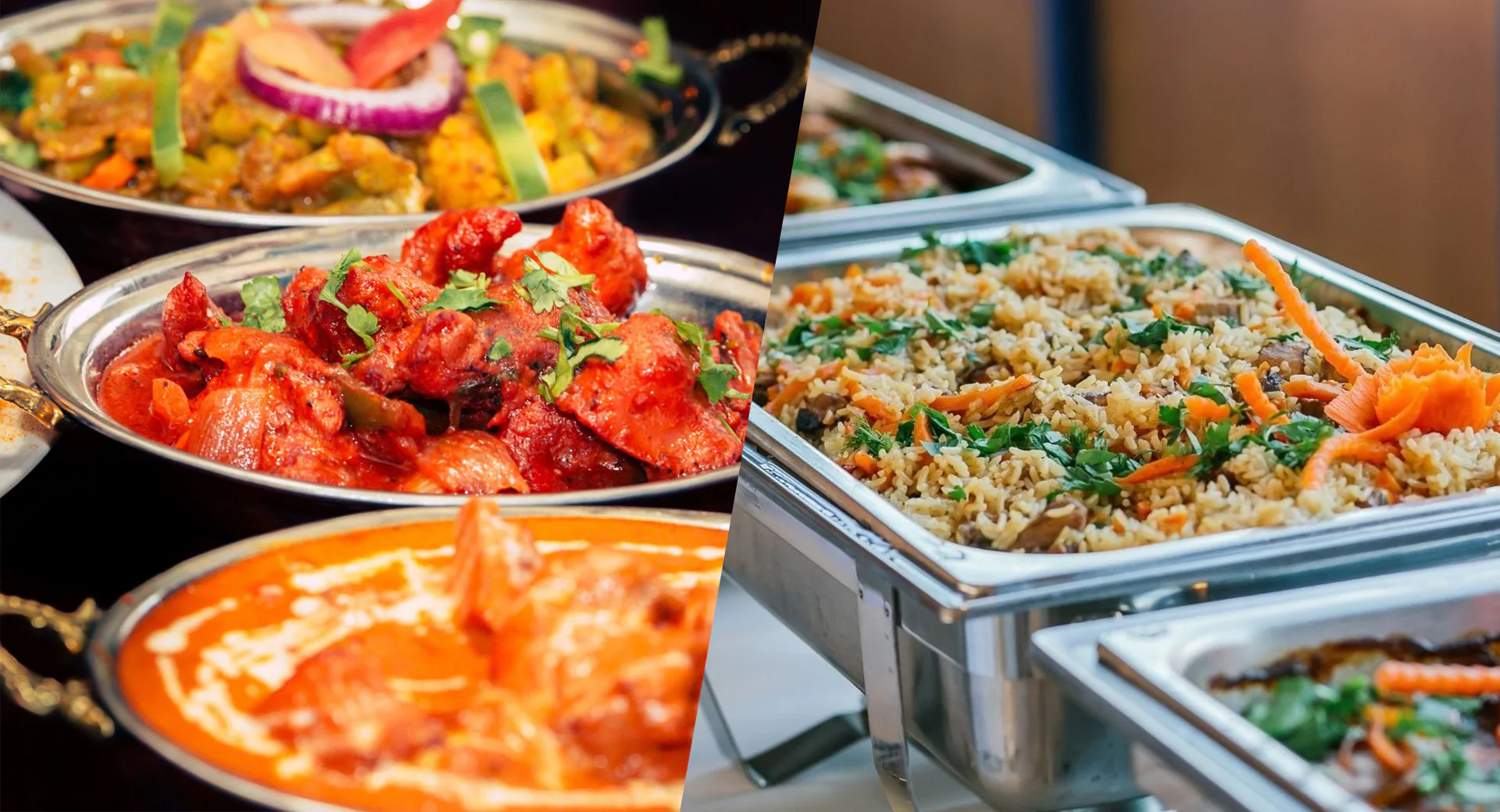
Choosing between South Indian and North Indian catering is really a question about the event you are hosting. North Indian menus often fit guests who expect rich curries, tandoor-style items, breads, paneer dishes, biryani, and a classic buffet rhythm. A South Indian direction can bring lighter rice-based dishes, lentil stews, chutneys, tangy flavours, and breakfast or tiffin-style items. The right Toronto event menu may use one direction clearly or blend both with care.
This guide is not a promise that every regional dish is always available from Mehfill. It is a planning framework for choosing the right menu direction before the written quote confirms dishes, service style, staffing, equipment, timing, and venue requirements.
South Indian vs North Indian catering at a glance
| Planning factor | South Indian direction | North Indian direction |
|---|---|---|
| Typical menu feel | Rice-forward, lentil-based, tangy, coconut, curry leaf, chutney, dosa or idli-style items where available | Richer curries, tandoor or grill items, paneer, dal, naan or roti, biryani, and buffet-friendly mains |
| Often works well for | Breakfast, brunch, temple or cultural gatherings, vegetarian-heavy menus, lighter daytime events, and guests who enjoy sharper flavours | Weddings, receptions, corporate dinners, birthdays, mixed guest lists, and events where a familiar Indian buffet is expected |
| Service questions | Confirm whether items are served buffet-style, packaged, or as a quote-approved live or specialty setup | Confirm buffet selections, tandoor choices, breads, staffing, and whether live service is part of the plan |
| Dietary fit | Can be naturally vegetarian-friendly, but vegan, Jain, gluten-aware, nut-aware, and cross-contact questions still need dish-level review | Can support vegetarian and halal meat planning, but dairy, nuts, gluten, and cross-contact still need dish-level review |
| Best decision rule | Use it when the guest list will recognize and value the regional direction | Use it when the event needs broad familiarity, richer mains, and an easier classic buffet structure |
When should you choose a South Indian catering direction?
Choose a South Indian direction when the event benefits from lighter, rice-forward, lentil-based, tangy, or vegetarian-centred food. In Toronto and the GTA, this can make sense for brunches, cultural or religious events, family functions, daytime celebrations, and guest lists where South Indian dishes are expected rather than treated as novelty.
The important planning question is not simply, "Can we add dosa?" It is whether the menu should be built around that regional eating style. South Indian-inspired catering can include items such as idli, vada, sambar, rasam, lemon rice, tamarind rice, curd rice, coconut chutney, payasam, and other dishes when they are available and quote-confirmed. A competitor such as Sangeetha Veg Restaurant publicly presents a South Indian catering menu in the GTA with items like idli, vada, chutneys, sambar, rasam, rice preparations, and a South Indian thali; that shows the reader expectation for this search, not a promise about Mehfill's exact menu.
When should you choose a North Indian catering direction?
Choose a North Indian direction when you want the event to feel familiar to a broad Toronto Indian-catering audience: curries, paneer, dal, biryani, breads, tandoor-style mains, and a buffet structure that many mixed guest lists understand quickly. It is often the safer starting point for receptions, corporate dinners, birthdays, and larger events where speed, recognition, and variety matter.
Mehfill's approved live-tandoor framework fits this direction more closely than a South Indian live station. The current Live Tandoor package includes three tandoor selections, one biryani, one light dessert, and one beverage, with choices such as paneer tikka, tandoori mixed vegetables, chicken tikka, malai kebab, hariyali kebab, tandoori chicken, chicken seekh kebab, and biryani options. Final selections still belong in the quote.
How do you decide for a mixed Toronto guest list?
For a mixed guest list, do not try to make every region equally represented. That usually creates a crowded menu with no clear meal story. Instead, choose one anchor direction and add a few supporting items that broaden comfort, dietary coverage, or nostalgia.
For example, a North Indian buffet anchor might use paneer, dal, biryani, breads, and a vegetable curry, then add one South Indian-inspired rice, snack, chutney, or dessert if it fits the quote. A South Indian brunch anchor might use idli or vada-style items, rice dishes, sambar, chutneys, and sweets, then add one familiar North Indian item for guests who want something richer. The final menu should feel intentional, not like two separate menus placed side by side.
Which option is better for weddings and multi-event celebrations?
For weddings, the best answer may be "both, but not at the same meal." Multi-event celebrations are ideal for menu progression. One event can be lighter, brighter, and more social; another can be richer, formal, and buffet-led. That gives each function a distinct role without forcing one overloaded menu to satisfy every tradition and preference.
If a Mehndi, Sangeet, ceremony meal, reception, or post-wedding gathering is being planned, compare the whole schedule instead of one plate at a time. The multi-event wedding menu guide explains how to vary service format, pacing, and the strongest food moment across several functions.
What should you ask before adding a live station?
Ask whether the station is approved, available, and useful for the actual room. Live food can be memorable, but it also introduces equipment, queue, staffing, fire approval, utilities, and service-window questions. A live idea that works beautifully outdoors or in a banquet hall may not fit a condo party room, office, or venue with strict cooking rules.
Mehfill's current approved live packages are Live Chaat and Live Tandoor. Dosa is intentionally not listed as a standing live package in the current live-catering data. If you want a South Indian specialty item or regional live element, ask for it as a quote-specific request and let the team confirm feasibility rather than assuming it is included online.
How do dietary needs affect the choice?
Dietary requirements can make either direction stronger, but they do not make either direction automatically safe. South Indian-style menus can be naturally useful for vegetarian or rice-based planning. North Indian menus can support halal meat, vegetarian mains, paneer, dal, and buffet variety. In both cases, ingredients, dairy, nuts, gluten, and cross-contact must be reviewed dish by dish.
Mehfill's current dietary position is specific: all meat served is halal, vegetarian, vegan, and Jain choices are standing menu categories, nut-aware requests are handled with a different dish, and the kitchen is not presented as allergen-free or zero-cross-contact. Use the dietary options page before making promises to guests.
How do cost and service format change the answer?
Cost is shaped by package framework, guest count, staffing, delivery, equipment, and venue complexity, not only by whether the menu is South Indian or North Indian. Mehfill's buffet frameworks currently start at C$28, C$38, and C$45 per person before HST, with Grand Mehfill quoted separately. Standard GTA delivery is C$40 with drop-off setup.
Live or BBQ service has a different structure: it starts at 25 guests and uses a C$100 total transportation, setup, teardown, and equipment fee, with staffing billed separately. If a regional choice requires special setup, staffing, or timing, the quote should show that clearly.
A practical menu decision framework
- Start with the event role: brunch, lunch, dinner, reception, corporate meal, religious event, or family gathering.
- Name the guest expectation: mostly South Indian, mostly North Indian, mixed Indian, or mixed non-Indian and Indian guests.
- Choose one anchor direction so the menu has a clear identity.
- Add supporting items only when they improve comfort, dietary coverage, or progression.
- Check the service style: buffet, boxed meals, finger food, live station, BBQ, delivery, or staffed service.
- Confirm the venue limits before promising any live or cooking element.
- Review dietary requirements dish by dish before approving the final menu.
What to send for a better quote
Send the date, full venue address, guest count, serving window, event type, regional menu preference, dietary needs, and whether the food should feel traditional, modern, light, rich, interactive, or formal. If the guest list has both South Indian and North Indian expectations, say that directly. It helps the team design a menu that feels balanced instead of guessing from a dish list.
To plan the actual event, start with Mehfill's Indian catering menu, compare the buffet package frameworks, and use the quote form to ask for a South Indian, North Indian, or blended menu direction. The written quote is the source of truth for final dishes, inclusions, staffing, and availability.
Sources and planning references
- Mehfill catering menu and service directions
- Mehfill buffet package frameworks and starting rates
- Mehfill Live Chaat and Live Tandoor package facts
- Mehfill dietary planning and cross-contact boundaries
- Mehfill Indian wedding catering planning page
- Sangeetha Veg Restaurant South Indian catering menu, used as public SERP-context evidence
- Rasoi Catering regional menu categories, used as public SERP-context evidence
- Toronto Public Health food safety at special events
Mehfill operating facts checked September 25, 2026. External pages are used to understand current public menu expectations; they do not define Mehfill's approved menu, pricing, or service promises.