
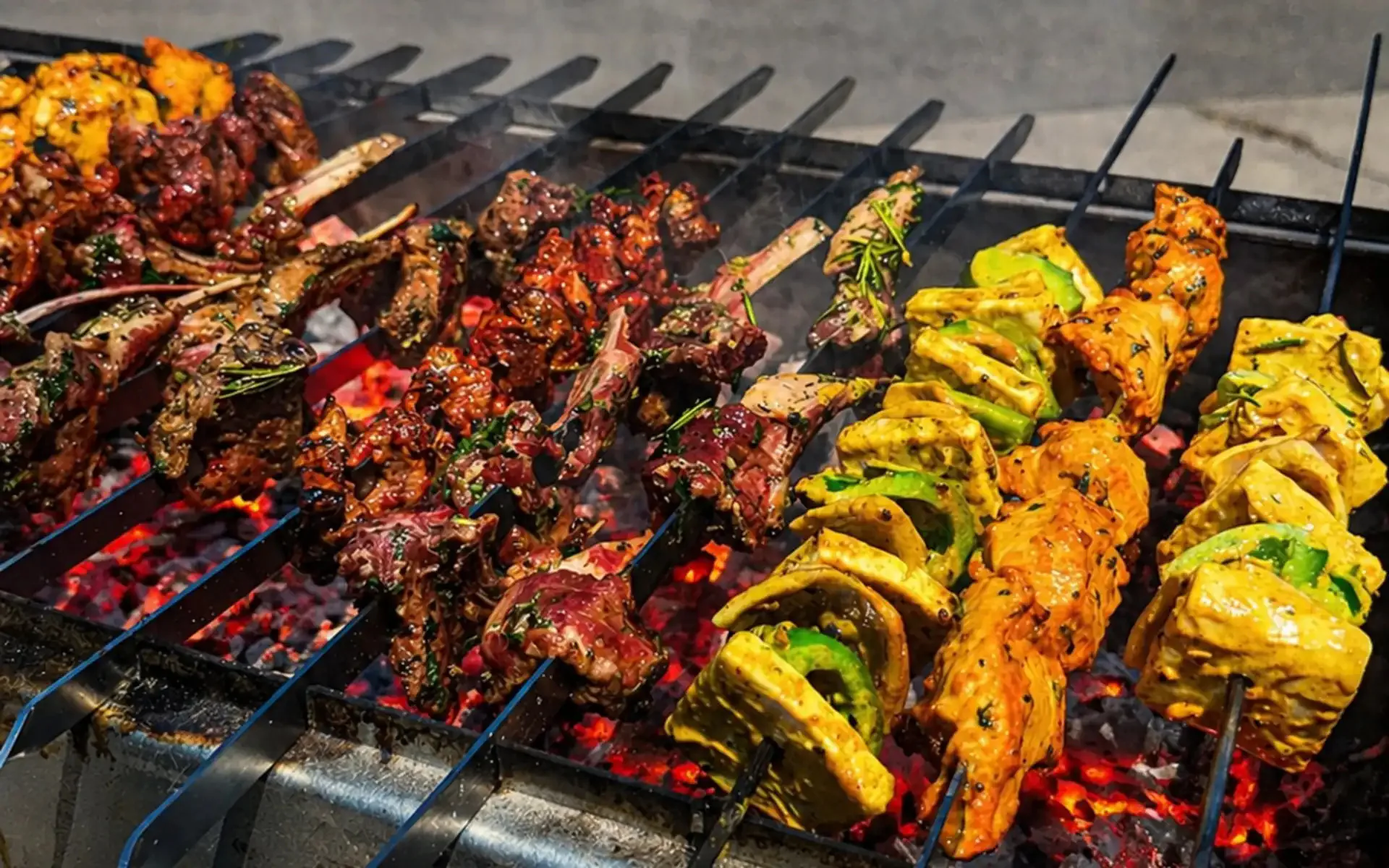
Indian BBQ and a traditional Indian buffet can serve many of the same celebrations, but they solve different event problems. BBQ makes fire-led preparation, aroma, and theatre part of the experience. A buffet prioritizes menu range, steady self-service, and a setup that is usually easier to separate from the kitchen or cooking area.
The decision should start with the venue and the event schedule—not with a photo of the food. If the location cannot approve the cooking setup, or if the weather plan is weak, the BBQ concept is not ready no matter how appealing the menu sounds.
BBQ versus buffet at a glance
| Planning factor | Indian BBQ | Traditional Indian buffet |
|---|---|---|
| Guest minimum at Mehfill | 25 | 15 |
| Current menu pricing | Menu and preparation scope confirmed by quote | Published buffet frameworks at C$13.99, C$19.99, and C$24.99 per person |
| Shared service fee | C$100 total for transportation, setup, teardown, and equipment | C$40 standard GTA delivery with drop-off setup |
| Staffing | Five service staff and two cooks for every BBQ/live event; two more service staff above 100 guests; billed separately | Optional or event-specific staffing confirmed by quote |
| Venue complexity | Higher: cooking permission, fire approval, placement, access, and site-specific requirements | Usually lower, though loading, holding, service space, and equipment still matter |
| Weather exposure | Material for outdoor plans | Lower when food service is fully protected indoors |
Where Indian BBQ earns the extra planning
BBQ is strongest when the preparation is part of what guests came to experience. It can suit a wedding function, summer celebration, corporate social, or community event where aroma and freshly finished grilled food add something meaningful to the room. The service can feel more personal because guests see the food journey rather than only the finished buffet.
That benefit comes with operating requirements. Mehfill’s current Indian BBQ service starts at 25 guests. Mehfill supplies tents, tables, and the tandoor for an approved event, while the client obtains venue and fire approval. The exact menu, on-site versus off-site preparation, access, ventilation, fuel, and equipment details are confirmed for the location.
Ontario’s Fire Code regulates open flames and devices in assembly settings, and the applicable approval depends on the setup and authority having jurisdiction. That is why an online article cannot approve indoor tandoor or open-flame cooking for a particular venue. The official Ontario Fire Code regulation and the venue’s own rules are the starting points; the written event plan records the approved result.
Where a buffet is the clearer choice
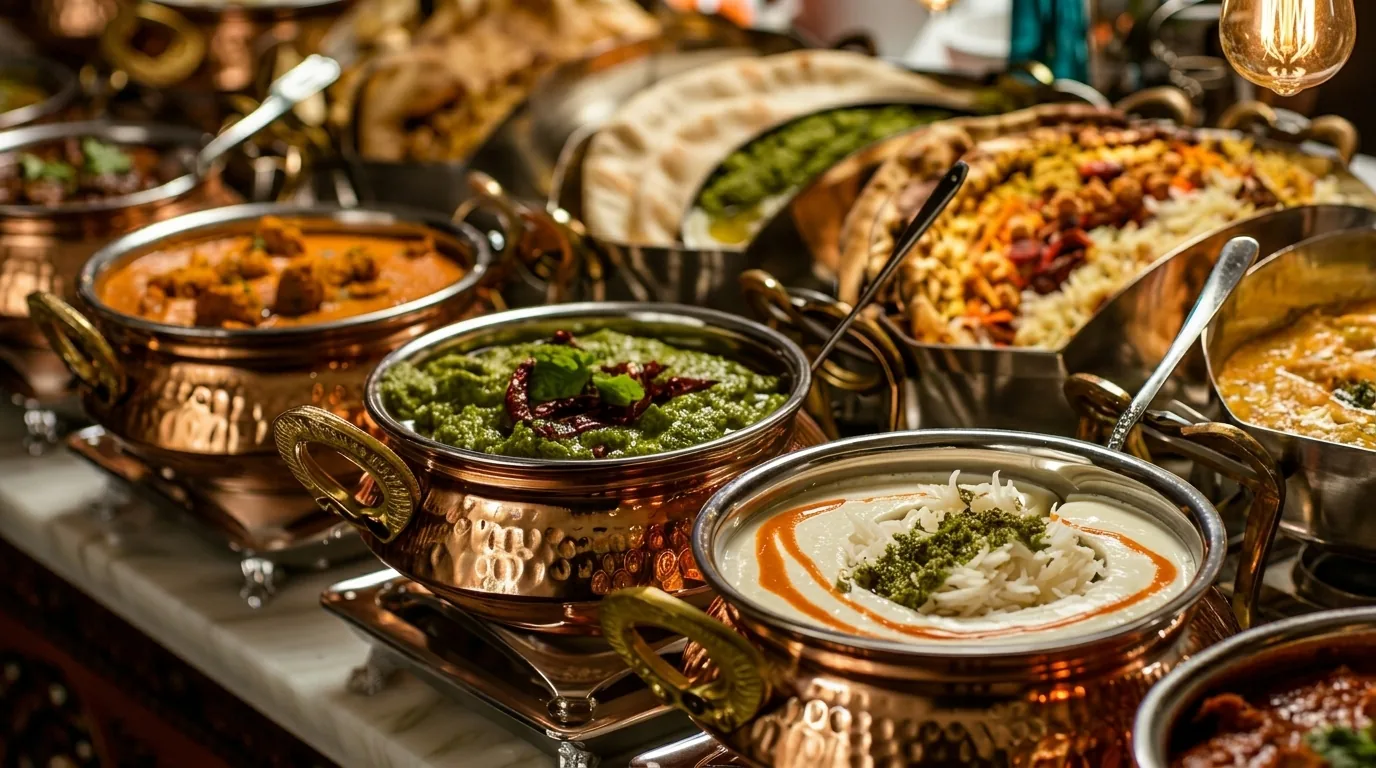
A buffet is often easier to fit into a tight run of show. Food can be staged, displayed, replenished, and served without making guest-facing cooking the centre of the room. Mehfill’s current buffet package frameworks publish clear selection counts and starting rates:
- Classic Buffet: C$13.99 per person
- Deluxe Buffet: C$19.99 per person
- Celebration Buffet: C$24.99 per person
Those rates begin at 15 guests and are before HST. Standard GTA delivery is C$40 and includes drop-off setup. Staffing, additional equipment, menu changes, and add-ons are confirmed separately. A buffet is not “no planning”; it simply moves attention from live production toward line position, replenishment, guest access, and the timing of the meal.
Compare the real cost structure
Do not compare only a BBQ food figure with a buffet per-person figure. Compare the complete structure.
BBQ planning total: confirmed menu scope + C$100 live/BBQ fee + separately billed staffing + event-specific equipment or add-ons + HST.
Buffet planning total: selected package or menu scope + C$40 standard delivery + any staffing + any event-specific equipment or add-ons + HST.
For BBQ, the standard team is five service staff and two cooks. Staffing is C$18 per person per hour before HST, with a three-hour minimum per person; travel time is not billed. The actual hours and any additional requirements belong in the quote. Avoid turning the formula into an assumed final total.
Guest flow is different
A buffet line can move steadily when guests can see the sequence and access it from the planned direction. BBQ can create natural pauses as guests watch, ask questions, or wait for freshly finished items. Neither is automatically faster. The serving window, number of service points, menu complexity, and arrival pattern determine the pressure.
If everyone must eat during one short interval, state that plainly in the enquiry. “Dinner from 7:00 to 9:00” is different from “all 150 guests must be seated with food by 7:30.” The second instruction affects layout, staffing, and whether live preparation should be the only service path.
Can you combine BBQ and buffet?
Yes, a hybrid can be discussed. A buffet can carry the broader meal while BBQ provides a focused feature. This approach can reduce the risk of sending every guest through one live point, but it also creates two operational zones that must work together. The venue needs space for both, and the service schedule must prevent one area from becoming an afterthought.
A five-question decision
- Will guests value seeing the food prepared, or is the priority a smooth meal with broad choice?
- Has the venue explicitly reviewed the proposed cooking setup?
- Is there a workable heavy-rain and thunderstorm plan for any outdoor element?
- Does the budget account for the full staffing and service structure?
- Can the floor plan support cooking, queueing, serving, and guest circulation without conflict?
If the first three answers are uncertain, start with the buffet and treat BBQ as an option to validate. If the experience is central and the venue can support it, submit an Indian BBQ catering enquiry with the venue address, guest count, schedule, and any written venue rules.
Sources and planning references
- Mehfill Indian BBQ operating terms
- Mehfill buffet packages and published starting rates
- Mehfill Indian BBQ planning checklist
- Ontario Regulation 388/97: Fire Code
Buffet packages updated October 10, 2026. Other operating facts checked August 26, 2026. Venue and fire requirements are event-specific.