
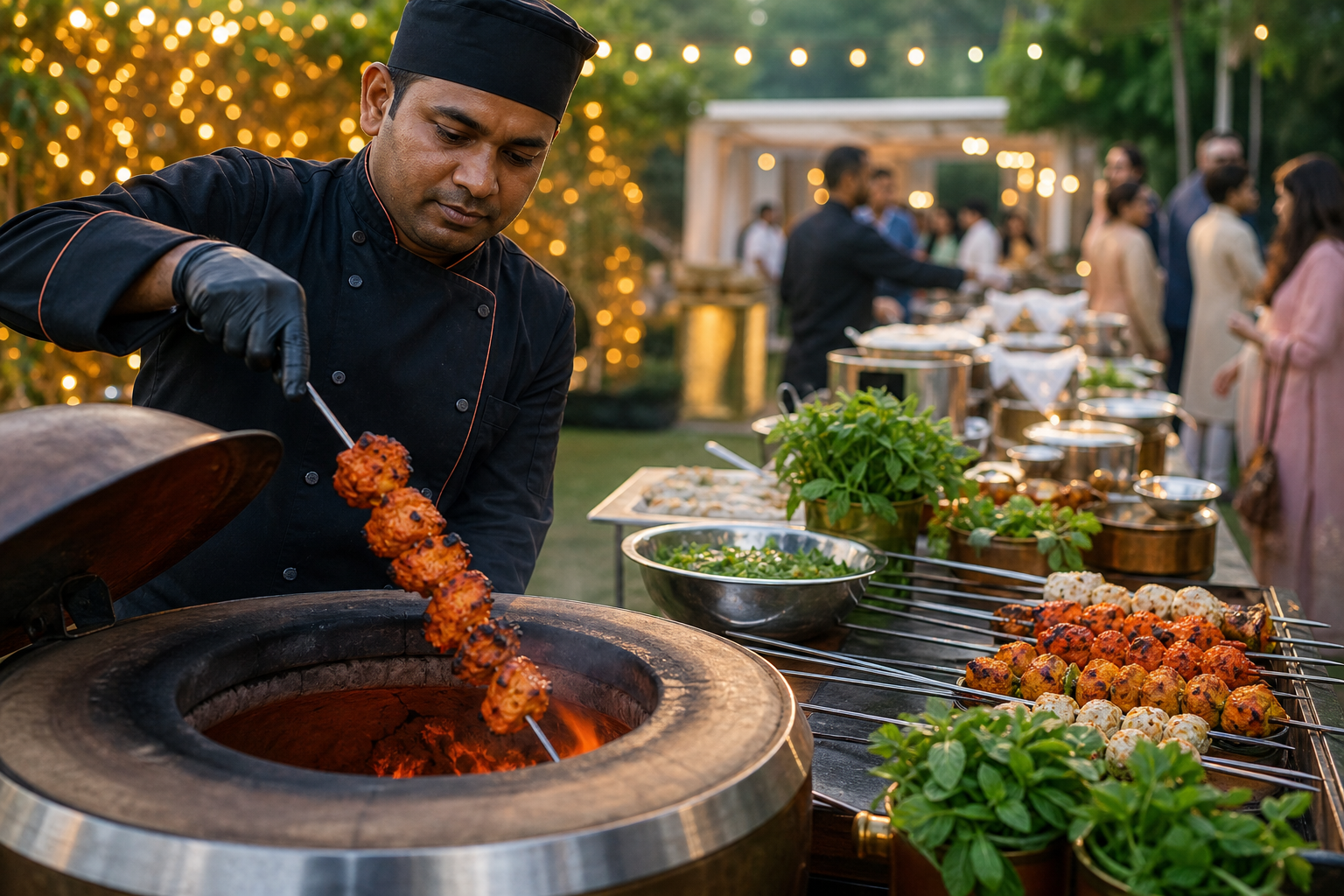
This short glossary defines live tandoor catering and provides a focused eight-point decision checklist planners can use when evaluating a tandoor station for weddings, corporate events, or community gatherings in the Greater Toronto Area. Use the checklist during vendor calls or paste it into an enquiry so a caterer can confirm logistics, safety, and same-day feasibility.
What live tandoor catering is
Live tandoor catering places a charcoal-heated clay oven, the tandoor, at an event so chefs can cook and finish items to order in front of guests. The live fire and clay walls produce a distinctive smoky texture and char that is difficult to replicate with preheated buffet pans, and many hosts choose this format for the theatre and the freshly finished texture it delivers. CaterCow explains how a clay tandoor and live fire shape flavour and why timing matters for service.
Mehfill Indian Cuisine offers staffed live-station formats including live tandoor and Indian BBQ as part of its event services, and frames these options inside an event-first enquiry process so hosts can confirm venue rules, guest counts, and dietary needs before booking. See Mehfill’s catering menu for examples of live stations and staffing options: Mehfill Indian Cuisine and Mehfill catering menu.
When to choose a live tandoor station
Choose a live tandoor station when the goals are guest engagement, a signature flavour profile, or freshly finished appetizers and breads. Typical occasions include milestone weddings, cultural festivals, premium corporate receptions, and private parties where tactile, hot food served at point of contact creates value.
Avoid a live tandoor station when a venue has strict no-fire or no-ventilation rules, when guest flow requires entirely plated service without live counters, or when the menu must be left hours ahead and kept under heat lamps. CaterCow recommends pairing tandoori items with saucier mains to balance texture, and suggests timing service so tandoori items are eaten at peak quality.
Venue compatibility and safety requirements
Not every venue can host a tandoor. Live cooking counters need space, ventilation, and clear access routes for equipment and staff. Vendor vetting for live BBQ or tandoor counters should include a portfolio review and confirmation that the caterer’s equipment and exhaust plan match the venue’s capabilities. Happiffie advises confirming venue ventilation or outdoor space and verifying vendor equipment certifications before booking.
For weddings and larger events, use the venue’s rules as the starting point and confirm whether permits or fire marshal approvals are required. Jaflong’s event checklist highlights the importance of agreeing service timings and specialist extras with the venue several weeks before the event.
Key venue checks to run
- Ask if live open-flame cooking is permitted indoors, and whether electrical or gas hook-ups are available.
- Confirm minimum clearances around the tandoor, rigid placement rules, and emergency exit access.
- Request the venue’s policy on ventilation, smoke alarms, and any required permits.
- Validate loading and unloading access for heavy ovens and fuel supplies.
Fuel, equipment and chef qualifications to ask about
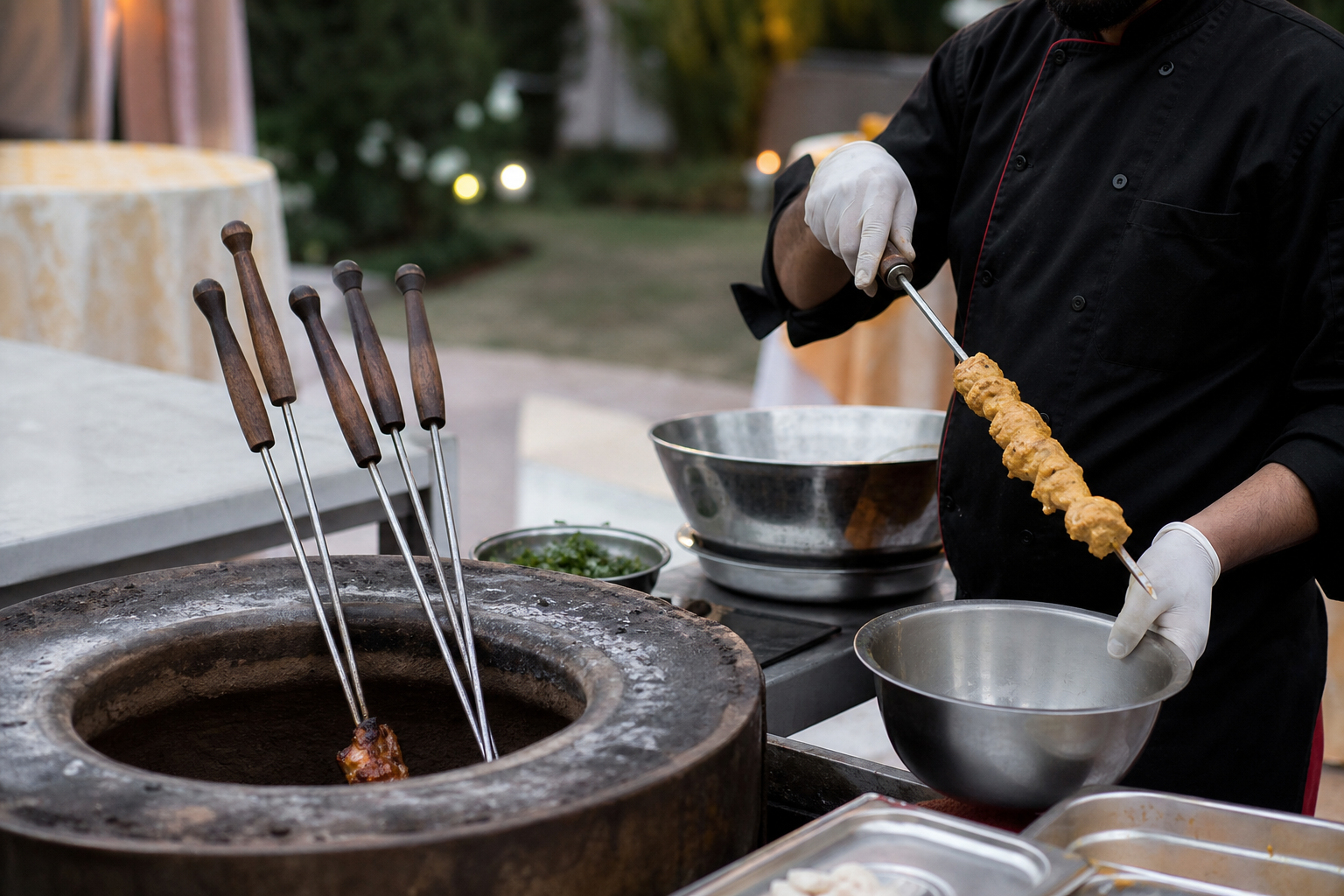
Tandoor setups vary: some use traditional charcoal-heated clay ovens, others use portable gas-assisted tandoors or hybrid units designed for indoor events. Each fuel type changes exhaust needs and setup time. Caterers should explain fuel, burn time, and backup plans for fuel or temperature issues.
Hiring and validating a tandoor chef benefits from role-specific interviews and a practical trial. ChefPin provides a structured tandoor chef interview and practical trial checklist you can request or adapt, including cooking tests, safety checks, and a scoring model to verify technique and timing before a major event.
Chef qualifications to verify
- Proven experience running live tandoor stations at comparable event sizes.
- Completion of practical trials or tasting sessions, ideally scored using a checklist such as the ChefPin trial model.
- Documented food-safety training and on-site safety demonstrations for live-fire equipment.
- Clear roles for assistants and a defined staffing plan for service flow.
Equipment questions to ask vendors
Before you book, use the following equipment-focused questions when you speak to vendors or include them in an enquiry email. These questions are critical to confirm the tandoor will operate safely and without venue conflicts.
- What fuel do you use for the tandoor at this venue type: charcoal, gas, or hybrid?
- What exhaust or ventilation do you require, and do you provide portable extraction if needed?
- How long does the tandoor take to reach service temperature, and what is your warm-up and cool-down protocol?
- Do you carry fire suppression or first-aid equipment on site?
- What is your contingency plan if the tandoor cannot be used on the day?
Chef trial and verification checklist
Ask vendors for a recorded or live chef trial and tasting that covers these items before you commit. ChefPin’s trial checklist shows how an employer can score a tandoor cook on technique, speed, safety, and palate; ask your caterer whether they run similar trials.
- Observe one full service cycle: prepare, cook, and plate tandoori skewers and breads.
- Check time-to-plate for each item and whether texture and temperature meet expectations.
- Request documentation of safety checks, fuel logs, and a staff safety briefing sample.
- Taste for smoky balance and ask which mains will be paired to complement the tandoori profile.
Staffing, service flow and timing
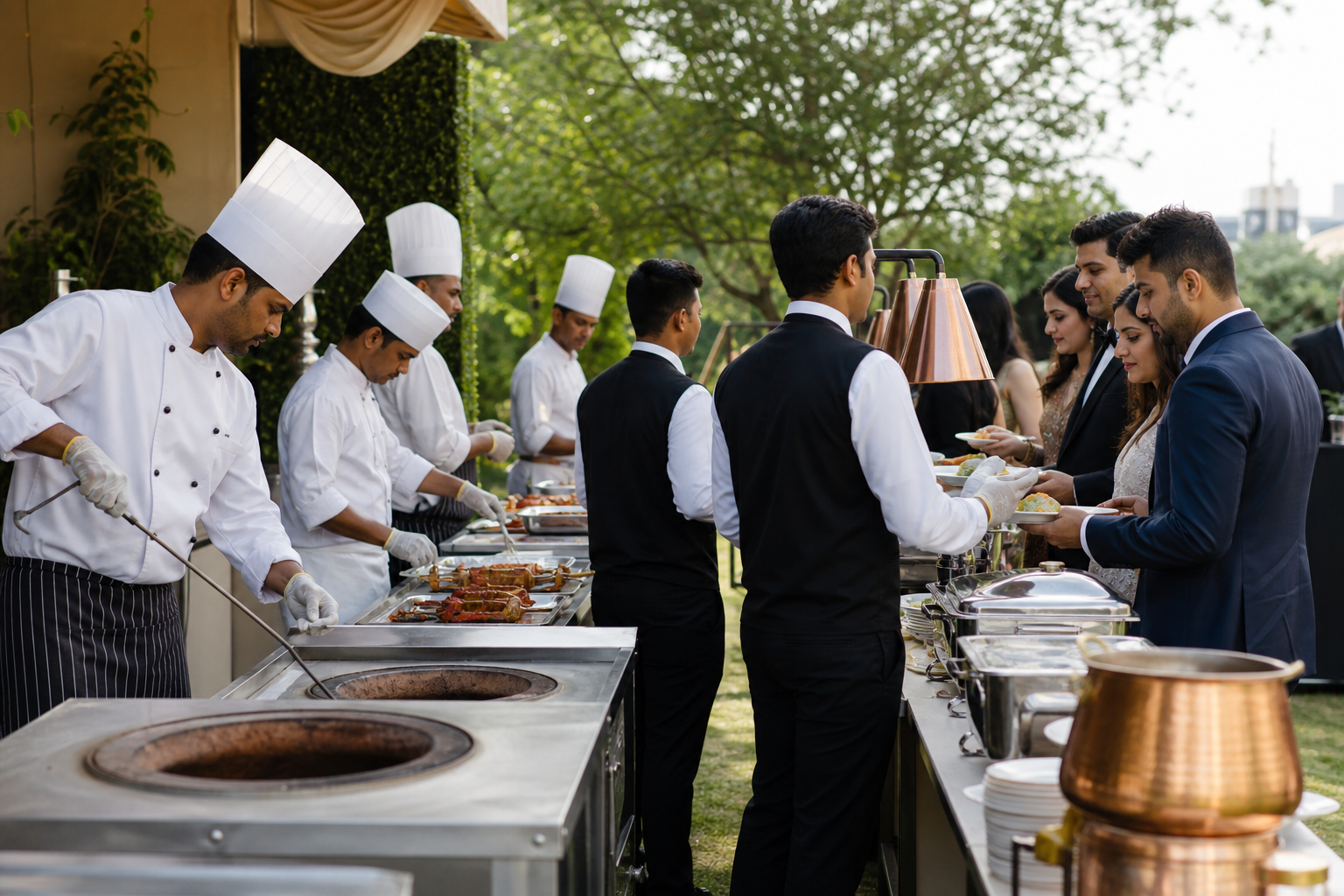
Live tandoor stations add complexity to staffing and timing. Plan for at least one dedicated tandoor chef plus one assistant per station for guest interaction, replenishment, and safety management. Jaflong’s event checklist recommends confirming service timings and finalising the menu based on tastings several weeks before an event; apply the same planning rhythm to live stations.
Sequence tandoor service so guests receive tandoori items at peak: use the tandoor for starter rounds, short-run breads, or an evening snack service timed between mains. CaterCow recommends pairing tandoori dry items with saucier mains so textures and temperatures remain balanced for guests.
Service timing example
- Reception hour: two rounds of tandoori appetizers, each 20 to 30 minutes apart, plated and passed.
- Dinner call: a final tandoor bread fresh at the start of mains to complement saucier entrées.
- Late evening: on-demand tandoori snacks or kebabs for a limited window to maintain quality.
Menu pairing and dietary accommodation
Tandoori items work best as bright, textured components paired with saucier mains and neutral starches. Consider offering a mix of vegetarian and protein options so diverse guests can experience the live station. CaterCow recommends pairing tandoori appetizers with saucier mains like butter chicken or tikka masala for balance.
Confirm dietary accommodations early. Mehfill emphasises inclusive dietary planning and lists halal, vegetarian, vegan, Jain, gluten-aware, dairy-free, and nut-aware capabilities as part of its event services; discuss cross-contact controls and separate prep where required during the guided enquiry.
Vendor verification checklist and booking logistics
Before you sign, request the following documentation and confirmations so the live tandoor sits inside a clear, accountable plan. Happiffie recommends vendor portfolio reviews and certification validation for live counters; Jaflong recommends finalising service timings and guest dietary breakdowns several weeks out.
- Photos of identical tandoor setups at events of similar size and similar venue types.
- Evidence of food-safety training and, if available, equipment certifications or vendor insurance details.
- Local references who can confirm on-site behaviour, timing, and food quality.
- A written contingency plan for fuel, weather (if outdoors), and venue constraints.
- Clear confirmation of staffing levels, service windows, and the exact items to be cooked live.
- Ask whether same-day catering is possible and confirm turnaround expectations; Mehfill offers same-day catering where feasible and will confirm during the event-first enquiry.
Eight-point decision checklist to use on vendor calls
- Venue compatibility: confirm indoor permission, ventilation needs, and permit requirements with the venue.
- Fuel and equipment match: verify fuel type, exhaust plan, warm-up time, and backup options.
- Chef qualifications and trial: request a practical tandoor trial or recorded cooking demo and references.
- Staffing and service flow: confirm dedicated tandoor staff and a clear timeline for rounds.
- Menu pairings and timing: ensure tandoori items are paired with saucier mains and timed for peak quality.
- Dietary and cross-contact handling: request written procedures for halal, vegetarian, vegan, Jain, gluten-aware, dairy-free, and nut-aware separation.
- Vendor proof and portfolio: ask for photos of identical past setups and local references.
- Booking timeline and same-day feasibility: confirm final guest counts, service timings, and whether same-day service is possible.
Frequently asked questions
What does a live tandoor station need from my venue
At minimum, a tandoor needs clear floor space, safe access for fuel and staff, and a ventilation or outdoor location that the venue permits. Confirm the venue’s rules on open-flame cooking, smoke extraction, and any required permits before you book.
How long does tandoori food stay at its best after it comes off the tandoor
Tandoori items are best eaten within minutes of removal to preserve texture and the smoky char. For events, plan short service windows and multiple small rounds rather than a single long buffet hold time to keep quality high.
Can a live tandoor station meet halal and vegetarian dietary needs
Yes, many caterers run halal-verified supplies and separate vegetarian tandoor items. Ask the vendor for written procedures about ingredient sourcing and cross-contact separation; Mehfill lists inclusive dietary planning among its services and confirms these details during the guided enquiry.
How do I verify a tandoor chef’s skills before booking
Request a practical trial or tasting, ask for a scored trial checklist, and check local references. ChefPin provides a structured interview and trial approach you can ask vendors to use or adapt to verify technique, speed, and safety practices.
Can I book a live tandoor station same-day in the GTA
Some caterers, including those offering same-day service where feasible, may accommodate short-notice bookings, but confirm equipment, staffing, and venue permissions before assuming availability. Mehfill will confirm same-day feasibility during its event-first enquiry process.
Mehfill Indian Cuisine can answer these checklist items during a guided enquiry and confirm menu and logistics for events across the Greater Toronto Area; see the catering menu for examples of live stations and staffing options at Mehfill catering menu or start a guided enquiry at Mehfill Indian Cuisine.
References: ChefPin tandoor chef trial checklist (ChefPin tandoor checklist), Jaflong event checklist (Jaflong event checklist), Happiffie vendor vetting for live BBQ counters (Happiffie vendor vetting), and CaterCow notes on tandoori pairing (CaterCow tandoori pairing).