
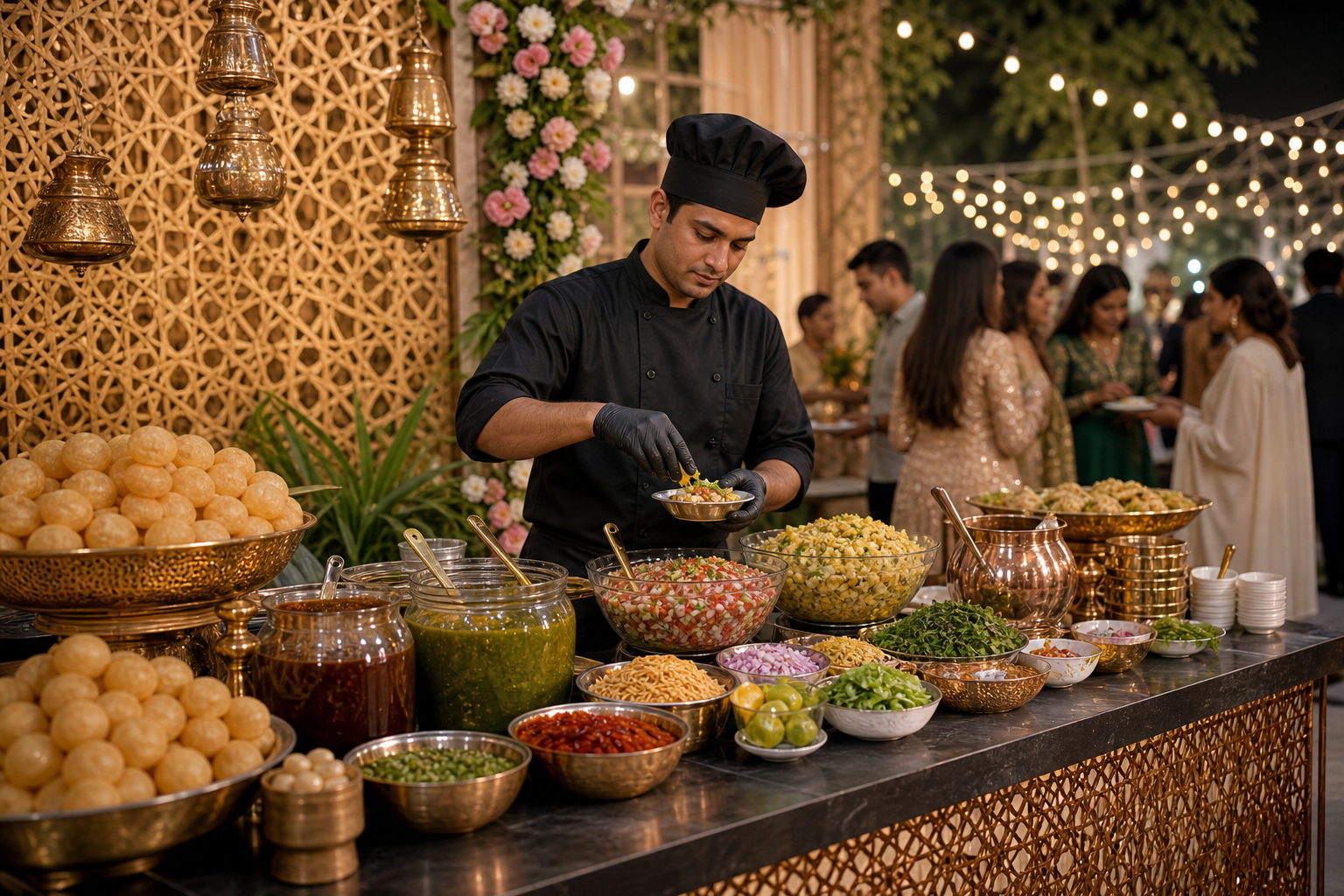
This step-by-step checklist for a live chaat station setup is written for hosts and planners in the Greater Toronto Area who need a ready-to-send venue brief and a practical run sheet. Use this to confirm equipment, power and water needs, staffing roles, food-safety controls, guest flow, timing checkpoints, and explicit stop points or fallback options before you commit to staffed live service.
Copyable one-page venue brief to send the venue and caterer
Paste this brief into an email or contract so the venue and caterer have the key facts in one place. Mehfill Indian Cuisine offers live stations including Live Chaat and Live Tandoor as event options and recommends a guided enquiry to confirm availability and logistics before booking; see the live stations page for menu examples and next steps.
- Event: [Name and date]
- Arrival window: [two hour window] for delivery and load-in
- Service window: [start time] to [end time], with peak service at [time]
- Space required: 8 ft length by 3 ft depth per station minimum, plus 2 m queue area
- Power: GFI protected 120 V outlets, specify available amps and circuit access
- Gas or open flame permission: Yes or no, and fire marshal contact if required
- Water: nearby sink or 5 gallon potable water access for handwashing and bin rinse
- Waste: labelled garbage and recycling point and staff access for removal
- Venue rules: no open flame after [time], noise limits, and security arrival process
- Contact for site issues: venue rep name and phone
- Caterer responsibilities: supply staff, equipment list, proof of insurance, and pre-service temperature logs
Link these items to your supplier quote. For a live stations overview, reference the caterer menu and live station descriptions provided by Mehfill Indian Cuisine at Mehfill Indian Cuisine catering menu.
Station equipment, layout and venue utilities you must confirm
A professional host station checklist should include station layout, temperature control and cross-contamination prevention, sanitation and cleaning, and documentation before service starts. Use the following lists when you inspect the venue or review a caterer proposal; they reflect industry host station best practice.
Equipment checklist
- Covered hot-holding units or bain-marie and insulated hotboxes for pre-cooked bases
- Prep bins with lids, labelled for vegetarian, vegan and non-vegetarian toppings
- Sneeze guards or clear shields between staff and guests
- Dedicated serving spoons, ladles and tongs for each menu lane to avoid cross-contact
- Condiment dispensers, small bowls and portion scoops
- Disposable or provided plated serviceware and napkins, plus backup stock
- Hand-sanitiser station and single-use gloves for staff
- Visible thermometers and a temperature log pad or digital photo log for monitoring
- Cleaning kit: sanitiser spray, cloths, sani buckets, and waste bags
- Signage and menu boards that label allergen and dietary lanes
Before service verify that every item on this equipment checklist will be present and operating during load-in. For a formal host station checklist reference see an industry station operations checklist (host station setup checklist).
Layout checklist and footprints to confirm
- Staff prep area behind the pass with at least 60 cm clearance from the service edge
- Guest-facing service line with sneeze guard and clear condiment placement
- Separate queue entrance and exit paths to prevent reverse flow
- Dedicated vegetarian/halal lane if you expect mixed dietary needs, clearly signed
- Runner path for restocking that does not cross guest flow
- Visible waste collection near the station exit, not inside the prep area
Power, gas, water and venue permits
Ask the venue for circuit details and written permission for any portable gas or open-flame use. Confirm whether outlets are GFI protected and whether additional cable protection is required for foot traffic. If no running water is available on site, request access to potable water or specify 5 gallon containers for wash and rinse. Where the venue requires fire-marshal approval for live cooking, obtain that confirmation in writing prior to load-in.
Staffing, roles and show-day timing checkpoints
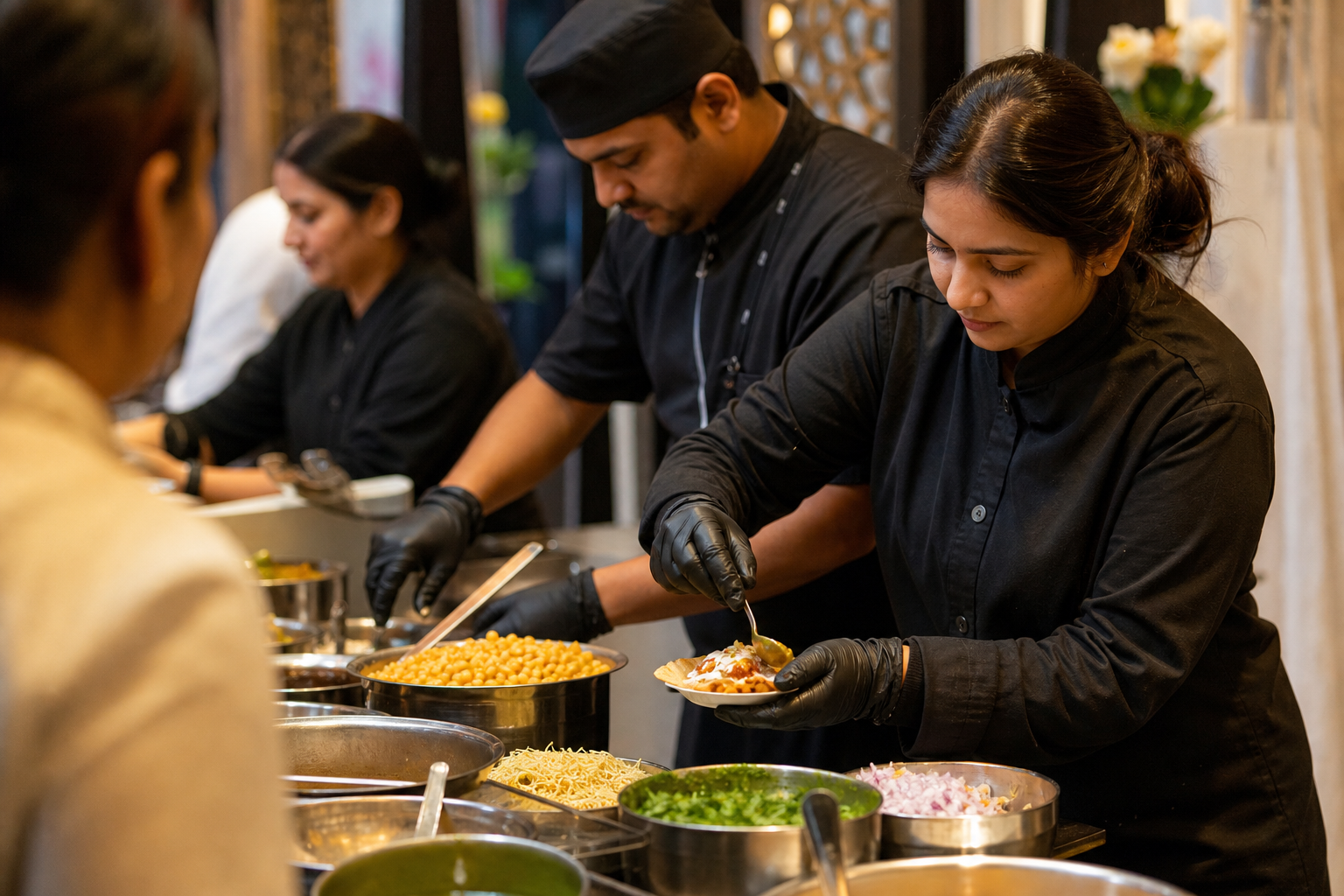
Live elements are a performance as much as they are food service. A short run sheet with named roles keeps quality consistent and speeds decision making. Include arrival and testing checkpoints to mirror professional live-service checklists used across events.
Station roles and brief responsibilities
- Station lead: final assembly, quality control and guest interaction
- Assistant: toppings, refill and sanitation of the pass
- Runner: restocking, waste removal and liaison with kitchen
- Client point of contact: single decision maker for on-site changes and approvals
- Float staff: on-call staff to cover breaks or unexpected demand
Show-day timeline and checkpoints
- Arrival and load-in during the confirmed window
- Equipment test and power check within 20 minutes of arrival
- Temperature checks and pre-service photo log for hot-holding units
- First-service readiness announcement 5 minutes before public access
- Peak-service staffing at agreed time with a mid-service quality and hygiene check
- Post-service clean and handover within the agreed departure window
For technical events or live streaming of a station, include AV checks and redundancy displays for the streaming position as part of your pre-service test plan. Industry checklists for pre-live technical checks are useful references (pre-live checklist, live stream checklist).
Food safety, allergen controls and sanitation steps
Food-safety checks and cross-contact prevention are non-negotiable. Require visible monitoring and documented logs from your caterer and confirm written cross-contact protocols before signing. A host station checklist covers temperature control, food handling and labelling, and sanitation procedures.
Temperature, holding and monitoring
- Require visible thermometers at each hot-holding unit
- Ask for a pre-service temperature log and a mid-service check recorded either on paper or as a time-stamped photo
- Confirm the caterer will remove or replace any item that falls outside safe holding procedures and document the action
These steps follow standard station operation practices for safe service and documentation.
Allergen and dietary separation
- Label prep bins and serving lanes for vegetarian, vegan, Jain and halal items
- Use separate utensils and avoid shared condiment containers unless single-serve options are provided
- Require a written cross-contact protocol from the caterer and ensure staff are briefed before service
Sanitation, cleaning and documentation
- Hand-sanitiser available at the station and a scheduled wipe-down every 20 to 30 minutes during service
- Sanitiser buckets and cloth rotation for staff to maintain a clean pass
- Documented incident and complaint reporting process with a named caterer contact for follow-up
Guest flow, portioning and how to avoid bottlenecks
Good flow keeps guests happy and ensures consistent quality. Use clear signage and staff directions to keep throughput moving and decide portioning strategy to match guest count and event pace.
Simple queue and signage rules
- Separate arrival and exit paths so guests do not cross the assembly line
- Mark dietary lanes with large, visible signs and list main allergens
- Station a staff member at peak times to shepherd the queue and answer quick menu questions
Portion control and peak-service planning
- Choose between small frequent topping batches for freshness or larger pre-portioned trays for speed
- Confirm with the caterer how portion size will be controlled so guests receive consistent servings
- Schedule an extra assistant for anticipated peak windows to speed replenishment
Stop points, common risks and fallback decision criteria
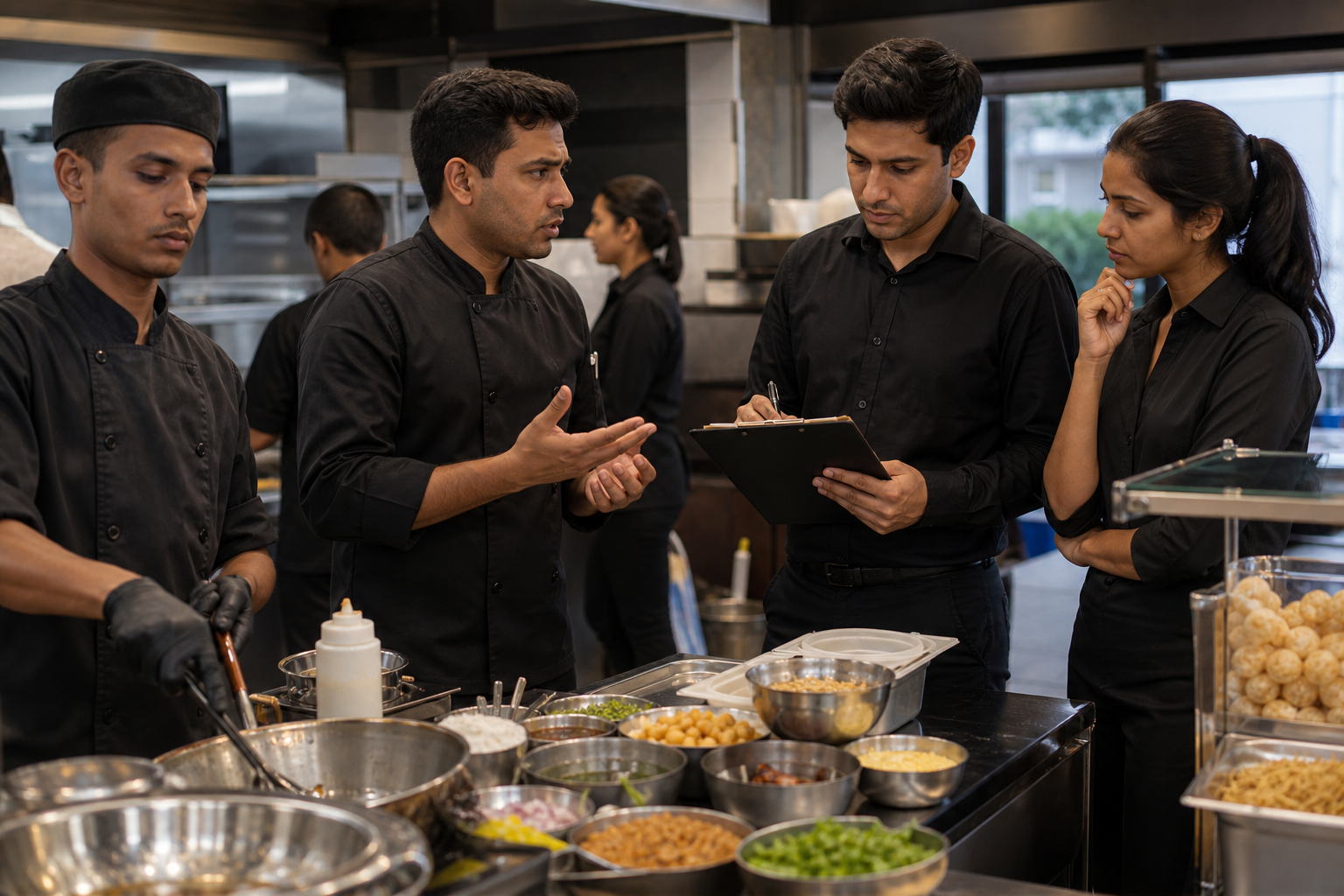
Define explicit stop points and fallback options in advance so the team can act quickly if something goes wrong. Use contract language to require backup staff, replacement items and a documented refund or credit pathway for significant failures.
Common objections and operational failure modes to plan for
- Late delivery or load-in beyond the agreed window
- Order inaccuracies or missing dietary items
- Inconsistent food quality or suspect food-safety incidents
- Staff no-show or insufficient staffing for peak service
Clear stop points and when to convert service
- Loss of required power or gas that cannot be remedied within the event window: switch to plated or boxed service
- Any active food-safety incident or evidence of contamination: stop live assembly and trace affected items
- Staffing shortfall beyond an agreed buffer period: convert to pre-portioned service until relief arrives
- Venue refusal for open-flame or sudden permit denial: revert to non-live formats immediately
Contract and booking clauses to require
- Signed menu confirmation with allergen declarations
- Arrival and load-in window with penalties or remediation for late arrival
- Backup staffing guarantee and a named substitute contact
- Liability insurance proof and any venue-required permits
- Refund, replacement or credit policy for major quality or fulfilment failures
- On-site client decision contact and 24-hour pre-event confirmation call
What to expect from a hired caterer versus running it yourself and a quick booking checklist
Hiring a professional reduces operational risk. A staffed chaat station from a caterer should include trained staff, all equipment, disposables, liability insurance and a contingency plan. If you run a DIY station you assume responsibility for permits, safety and staff training.
Deliverables you should expect from a caterer
- Qualified station staff and a named station lead
- All equipment and disposables listed in the venue brief
- Pre-service temperature logs and written cross-contact protocol
- Contingency plan for interruptions and a local escalation contact
Booking checklist to paste into your enquiry
- Event date, start and end time
- Estimated guest range and expected peak service time
- Space and power availability confirmation from the venue
- Menu selection with vegetarian, vegan and halal options specified
- Staffing hours and arrival window
- Cancellation, backup and replacement terms
Mehfill Indian Cuisine serves events across the Greater Toronto Area and offers live stations with an event-first enquiry process to confirm availability and logistics; see their catering menu for sample live station options and the next step to request a quote.
Frequently asked questions
How far in advance should I book a live chaat station in the Greater Toronto Area?
Book as early as possible for popular dates. For many weekday or small events same-day options may be feasible, but availability varies. Confirm scope, menu and logistics with the caterer during the guided enquiry before relying on same-day service. See the caterer live stations page for more detail.
What venue restrictions commonly prevent a live chaat station from running?
Common restrictions include no open flame policies, insufficient power or lack of potable water, and venue insurance or fire-marshal rules. Always send the one-page venue brief and obtain written confirmation from the venue.
How do caterers prevent cross-contact between vegetarian and non-vegetarian chaat toppings?
Require separate labelled prep bins and serving utensils, clear signage, and a written cross-contact protocol in the contract. Ask for staff training confirmation and visible separation at the pass during service.
Can a live chaat station be converted to plated or boxed service at short notice and what will it cost?
Yes, but conversion depends on staffing and available plating supplies. Include a conversion clause in your contract that defines the conditions for switch over and any additional fees. The caterer should provide the contingency plan during enquiry.
What should I include in the contract to protect against late delivery, wrong items, or quality issues?
Require menu confirmation, arrival windows, backup staffing, replacement and refund clauses, a complaint reporting process with response times, and proof of liability insurance. Specify that the caterer will provide pre-service temperature logs and a named on-site contact.
For a formal station operations reference see an industry host station checklist (host station setup checklist) and for live-event technical checks consult pre-live checklists used by event teams (pre-live checklist, live stream checklist).
Request a custom live chaat station quote or site visit with Mehfill Indian Cuisine to confirm availability and to have this checklist applied to your event.