
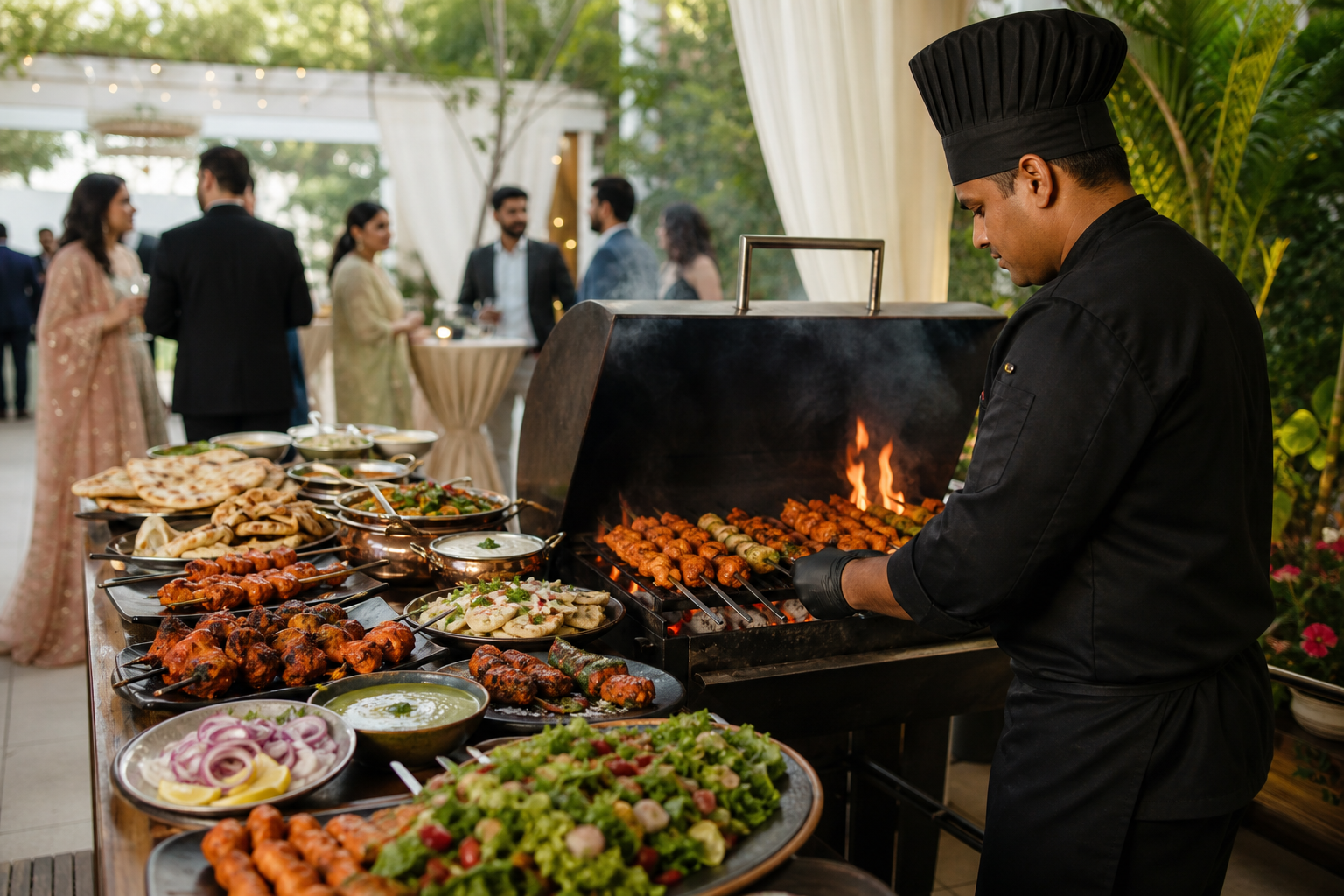
Indian BBQ catering ranges from dramatic live tandoor stations to practical boxed BBQ lunches. This comparison helps Greater Toronto Area hosts and planners choose the right format for guest counts, venue limits, dietary needs and timing. Each of the seven formats below includes what it is, when to choose it, a clear logistics checklist, dietary and cross-contact notes, and the key questions to ask your caterer.
Quick decision checklist: what matters when choosing an Indian BBQ format
Before you review the seven formats, use this shortlist to narrow options fast. Each criterion points to one or more formats below.
- Guest count and service flow: Small, experience-driven groups do well with interactive stations, while large crowds often need buffet or boxed formats.
- Venue rules and safety: Check open-flame, ventilation and electrical restrictions with the venue before booking live counters.
- Dietary mix: If many guests require halal, vegetarian or vegan meals, prefer menus and prep controls that separate lines and ingredients.
- Timing and staffing: Live counters usually need a 60-90 minute setup and a minimum staffing window of two hours. Typical event staffing is three to four hours for sustained service; use this as a baseline and confirm specifics with your caterer. For corporate staffing guidance see industry notes on live counters.
- Weather contingency: For outdoor BBQs have a rain plan and a covered staging area, or choose boxed lunches if the weather risk is high.
- Visual priorities: If you want theatre and guest engagement choose live tandoor or chaat counters; if you prioritise speed choose boxed or buffet models.
Mehfill Indian Cuisine offers buffet, boxed lunches, Indian BBQ and live stations and confirms logistics during a guided enquiry. Use their catering menu page to request options tailored to your event.
1. Live tandoor station
What it is
A live tandoor station cooks breads and tandoori proteins in an on-site tandoor oven, served hot to guests from a staffed counter.
Best for
Evening receptions, weddings and mid-size events where theatre matters and the venue allows controlled live cooking. Works well for groups roughly 75-250 guests when paired with a buffet or plated courses.
Logistics checklist
- Setup window: usually 60-90 minutes before service.
- Staffing: minimum two hours on station, typical three to four hours for receptions; confirm your caterer’s standard staffing duration for live counters.
- Space and ventilation: cleared staging area and access to power or fuel staging as required by venue rules.
Dietary notes
Easy to offer halal and vegetarian breads and proteins, but confirm cross-contact controls and separate utensils for vegetarian prep. Ask for ingredient lists if guests have strict allergies.
Questions to ask your caterer
- Do you require permits or venue approval for a tandoor?
- What fire-safety and ventilation procedures do you follow?
- Can you show recent photos of a tandoor setup at a similar venue?
2. Chef-led open grill (skewers and kebabs)
What it is
A staffed grill where chefs cook and finish skewers, kebabs and sizzling platters on-site. The service is visible and designed for quick turnaround.
Best for
Outdoor picnics, community festivals and corporate BBQs for crowds over 100 where the flavour of grilled proteins is the draw and ventilation is available.
Logistics checklist
- Equipment: grill footprint, fuel or gas supply, and a sheltered prep area if weather is variable.
- Staffing: 2-4 hours depending on guest flow and the number of stations.
- Queueing: plan clear lines and one or more service points to avoid backups.
Dietary notes
High-turnover, crowd-pleasing items are simple to label for halal and gluten-aware requests. Confirm separate prep lines if you need strict allergen control.
What to confirm
- Will the caterer supply a canopy, and does the venue have canopy rules?
- Do they have a weather backup if grills cannot operate outdoors?
3. Buffet with a BBQ feature
What it is
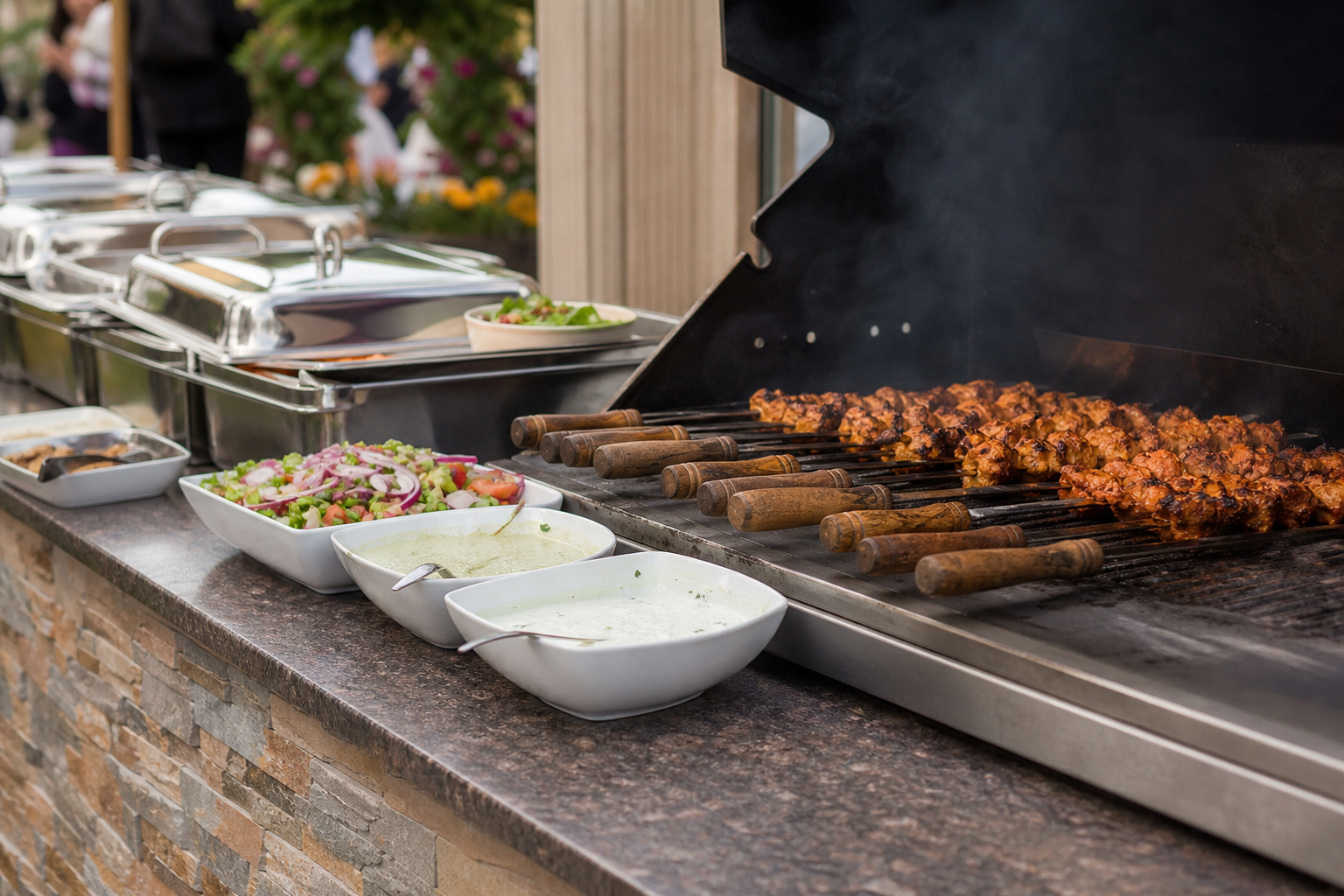
A hybrid where a live BBQ element supplements a main buffet line, letting guests pick from warmed mains plus a fresh-grilled feature.
Best for
Large mixed crowds of 150-500 where you want variety, faster throughput and a controlled serving flow.
Logistics checklist
- Separation: hot-holding and replenishment stations for buffet mains, with the BBQ feature positioned to draw interest without creating a bottleneck.
- Staffing focus: dedicated runners to replenish the buffet and one or more chefs on the BBQ for front-line service.
- Portioning strategy: place the most popular BBQ items early in the line to reduce waste and ensure consistent presentation.
Dietary notes
Use clearly labelled sections and request separate serving utensils and prep lines for vegetarian or allergy-sensitive dishes. For advice on what scales well in corporate and large-event Indian menus, see menu guidance that covers portioning and replenishment.
4. Boxed BBQ lunches (office lunches and short-timetable events)
What it is
Individually packaged BBQ-style meals for quick distribution, ideal for corporate lunches, campus events, or situations requiring social distancing and speed.
Best for
Guest counts from 10 to 300 where service time is short and you need predictable portions and fast delivery.
Logistics checklist
- Packaging: insulated boxes that keep main items warm and include clear allergen labels.
- Temperature control: staggered drop-off times and thermal carriers for multi-site deliveries.
- Lead time: boxed options tend to require less onsite staffing but confirm ordering deadlines with your caterer; some Canadian planners recommend at least two weeks for full menu choice on larger dates.
Dietary notes
Confirm allergen labelling, separate vegetarian boxes, and the inclusion of cutlery or napkins. For office events, boxed lunches simplify distribution and reduce service variables.
5. Vegetarian and vegan BBQ menus
What it is
BBQ formats that are fully plant-based or vegetarian, using marinated vegetable skewers, paneer alternatives, jackfruit kebabs and specially prepared vegan marinades.
Best for
Community cultural events, vegetarian-majority guest lists, or any occasion where plant-based options are central.
Logistics checklist
- Prep separation: separate chopping and cooking lines to avoid cross-contact with animal products.
- Menu items that scale well: spiced vegetable skewers, grilled flatbreads, and hearty rice or grain salads.
- Staff training: ensure the crew understands vegan ingredient swaps and cross-contact prevention.
What to request
Ask the caterer for explicit ingredient lists, separate prep photos, and assurances about shared equipment protocols to match dietary expectations.
6. Chaat-accented BBQ: a street-food complement
What it is
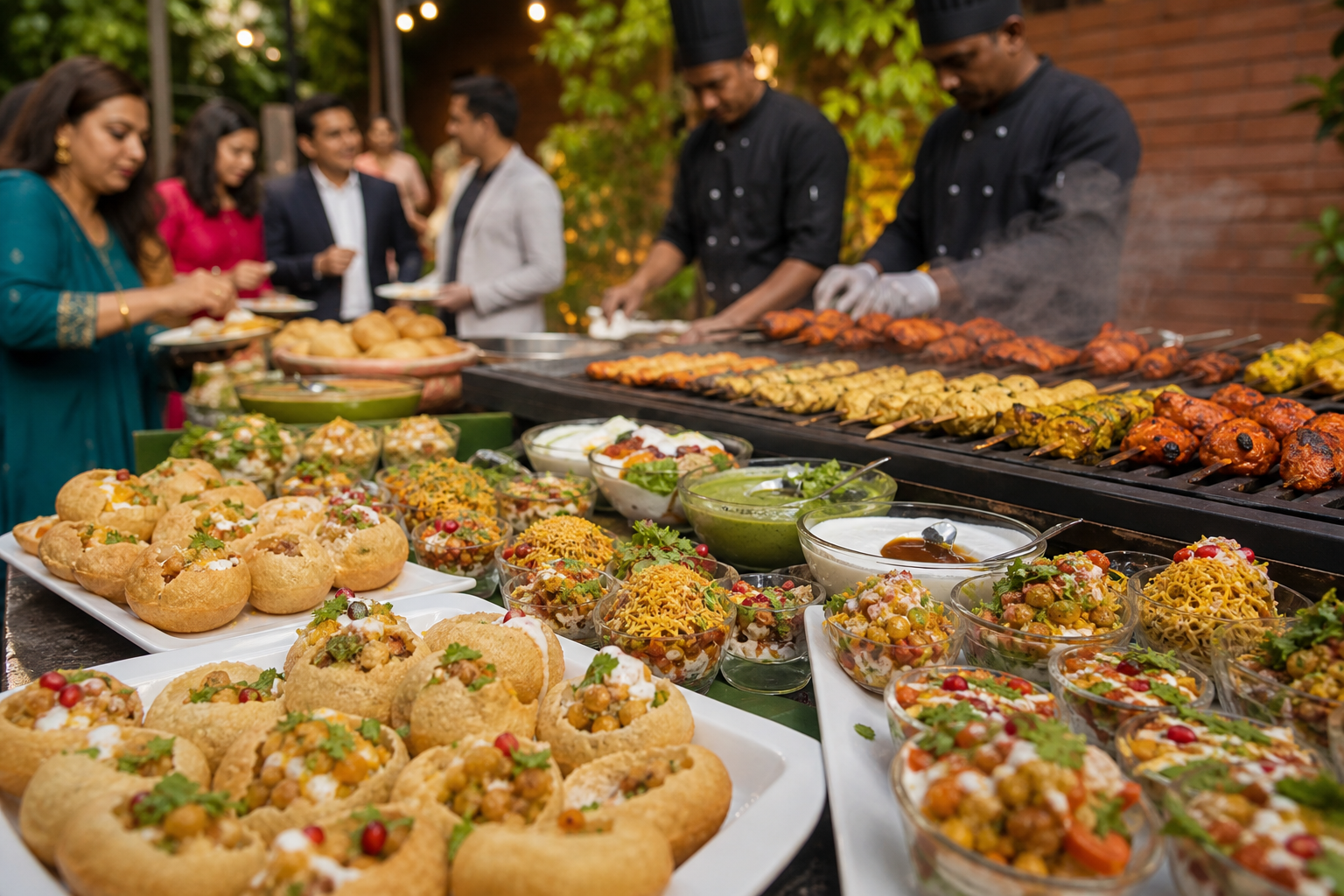
A live chaat or street-food counter placed alongside the BBQ, giving guests small, customised savoury bites that complement grilled mains.
Best for
Cocktail receptions, cultural festivals and family-style dinners where you want variety and engagement without slowing the main BBQ line.
Logistics checklist
- Equipment: small griddles, condiment stations and a compact counter for quick assembly.
- Staffing: one or two attendants for the chaat counter to keep service moving and manage toppings.
- Dietary flexibility: chaat counters can easily provide vegetarian and gluten-aware options with simple segregation and clear labels.
How it improves flow
A chaat counter spreads guests across attractions and increases perceived variety while keeping portions manageable and reducing pressure on the main BBQ line.
7. Interactive stations: build-your-own skewers and tasting passes
What it is
Stations where guests customise skewers or tasting plates, picking proteins, marinades and sides. This is an experience-first option that emphasises participation.
Best for
Smaller, experience-oriented events of 40 to 150 guests such as rehearsal dinners, product launches and private tastings.
Logistics checklist
- Flow control: use timed waves or ticketed passes to avoid long queues.
- Staff ratio: more staff per station to maintain hygiene and speed than with a single buffet line.
- Hygiene: visible hand-sanitising stations and dedicated utensils for toppings and sauces.
Combining formats
Interactive stations pair well with boxed or buffet elements to provide structure while still offering a memorable guest experience.
How to reduce common risks and objections
Hosts commonly worry about order accuracy, timing and inconsistent dish quality. Reduce risk by asking potential caterers to confirm order verification steps, show recent setup photos, provide a written staffing and arrival window, and offer a tasting or sample menu where possible. Mehfill uses a guided enquiry process to confirm availability, logistics and dietary accommodations before booking, and that step is the right place to lock in details and expectations.
For live counters require written confirmation of setup and cleanup responsibilities and a clear staging plan with the venue. For large outdoor events, book menus well in advance to secure ingredients and staffing; many Canadian caterers recommend at least two weeks for full menu choice on busy dates.
Frequently asked questions
Which Indian BBQ format works best for 50 to 150 guests at a rented hall or park?
For 50 to 150 guests a live tandoor station or a chef-led open grill paired with a modest buffet typically balances spectacle and speed. If the venue limits open flame choose a buffet-with-BBQ feature or boxed BBQ lunches instead.
Can Indian BBQ caterers accommodate halal, vegan and gluten-aware diets without cross-contact?
Yes, reputable caterers can, but you must request documented processes. Ask for separate prep lines, labelled ingredients and photos of segregated setups. Mehfill confirms halal, vegetarian, vegan and gluten-aware options and documents cross-contact controls during the guided enquiry.
How much lead time should I expect for a live BBQ or tandoor station in the GTA?
Lead time varies by date and scale. For outdoor festival-style bookings or full menu choice book early. For many events a two-week lead time is suggested to secure staff and ingredients, but confirm same-day feasibility or tighter windows directly with the caterer during enquiry.
What venue rules should I check before booking a live-fire Indian BBQ station?
Check the venue for open-flame and propane rules, ventilation requirements, electrical access, permitted staging areas and any insurance or permit needs. Always submit the caterer’s staging plan to the venue in advance.
Next step
If you are planning an event in the Greater Toronto Area and want tailored options or a quote, start a guided enquiry with Mehfill Indian Cuisine to confirm availability, dietary planning and exact logistics for the format you prefer. Request customised menus and sample setups on Mehfill’s catering page.