

Boxed lunch catering for offices means individually packaged meals delivered and staged for rapid, low-contact distribution at meetings, team days, or client-facing events. The format usually includes a main item, a side, a dessert or fruit, and individually wrapped cutlery and condiments. Offices choose boxed lunches when speed, portion control, and tidy distribution matter more than an on-site buffet or family-style service.
Why boxed lunches matter and when to pick them
Choose boxed lunches when you need fast, no-fuss distribution across a large or hybrid team, or when the event requires professional individual portions for guests. Boxed lunches reduce cross-contact logistics, make dietary segregation simpler, and present neatly in client-facing settings. For an operational comparison of formats, see the boxed lunches versus buffet discussion at LunchLink.
Authoritative catering guidance also emphasises that boxed lunches only work when freshness and reliable delivery are guaranteed. Poorly timed or stale boxed meals quickly turn a routine lunch into a negative experience. For practical advice on ordering and timing, read Waiter.com’s notes on when boxed lunches work best and what to confirm with a caterer.
Decision checklist you can use now
- Confirm event basics — date, start time, number of attendees, and the precise delivery address including building delivery instructions, loading dock access, and preferred entry door.
- Decide the format — boxed lunches, buffet, or family-style. Pick boxed lunches when you must limit traffic flow, provide individual seating, or present a client-facing meal. Zerocater explains common use cases for each format.
- Establish dietary needs — collect counts for vegetarian, vegan, halal, gluten-aware, dairy-free, Jain, and nut-aware guests. Confirm how the caterer segregates and labels those boxes.
- Set a delivery window and point of contact — assign one on-site lead and an alternate mobile. Agree arrival, set-up, verification, and handover checkpoints with the caterer.
- Confirm packaging and extras — request individually sealed cutlery, napkins, condiments, and any required disposable trays. Decide if eco-friendly packaging is required.
- Agree order verification and replacement terms — get a documented packing list, an order-accuracy checklist, and a replacement policy for missing or incorrect boxes.
- Plan distribution — decide whether boxes will be pre-sorted by dietary type, placed for table pickup, or handed out at seats, and share the plan with your on-site lead.
- Request written confirmation — include menu, quantities by dietary category, delivery times, parking and access notes, point-of-contact names, and payment terms in writing before you approve the order.
Checklist detail: menu, packaging, labeling, quantities and extras
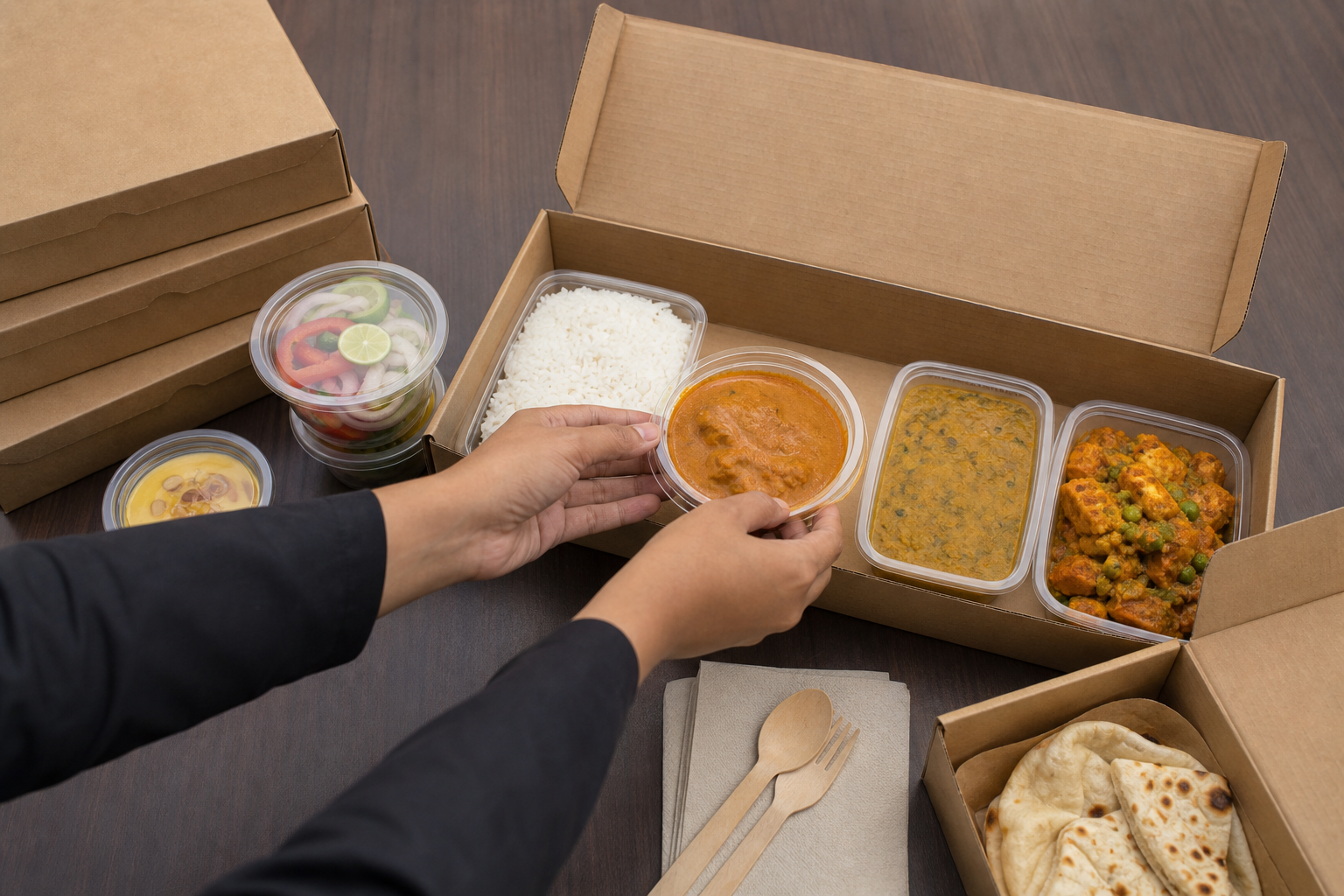
Menu and meal composition
Ask for a sample menu that lists the main component, side, and dessert for each boxed option. When ordering Indian boxed lunches, confirm whether signature items are suitable for boxed format and how hot items will be held. Mehfill Indian Cuisine lists boxed lunches as a core offering and can tailor menus for office events, including vegetarian and halal options. See Mehfill’s catering menu for examples.
Packaging and temperature control
- Confirm insulation for hot items and the use of cold packs for chilled items when required.
- Request leak-proof packaging and separate compartments or sauce pouches to preserve texture and avoid sogginess during distribution.
- Ask whether the caterer can provide a simple temperature check or log for sensitive hot or chilled items on request.
Labeling and dietary segregation
Require each box to display a clear label with the dish name and a dietary tag such as "vegetarian," "vegan," "halal," or "gluten-aware." Proper labelling reduces distribution mistakes and helps staff hand out boxes quickly. Mehfill confirms dietary accommodations during its guided enquiry and can label boxes on request.
Quantity planning and buffers
Provide a firm headcount and include a buffer to account for last-minute attendees. A common approach is:
- Small meetings (up to 20): add 3 extra boxes.
- Medium events (20 to 75): add 5 extra boxes.
- Large events (75+): add 3 to 5 percent as a buffer, depending on budget.
For recurring office programs, create a standing order template with a set buffer so repeat procurement is fast and predictable.
Extras and serviceware
Confirm whether cutlery, napkins, condiments, and allergy disclosures are included. If your building restricts single-use items or has specific waste rules, communicate that early. If you expect a client-facing room, ask whether servers or ushers can hand out boxes for a smoother guest experience.
Delivery windows, arrival checkpoints and on-site distribution
Follow established arrival milestones to reduce execution risk. Corporate playbooks recommend the caterer arrives well before the start time, completes set-up, and performs a final walkthrough with your point of contact before distribution begins. Zerocater’s corporate checklist provides a useful timing template you can adapt.
- Agree the arrival time and provide precise parking and loading instructions for the driver.
- Adopt a T-minus schedule such as: arrival T-75, unload and set-up T-60, verification T-45, final walkthrough T-30, distribution T-0. Adjust for building rules and elevator wait times.
- Ask the caterer to confirm departure time and to send photos of the staged boxes if you cannot attend the walkthrough.
Dietary segregation, labelling and allergy handling
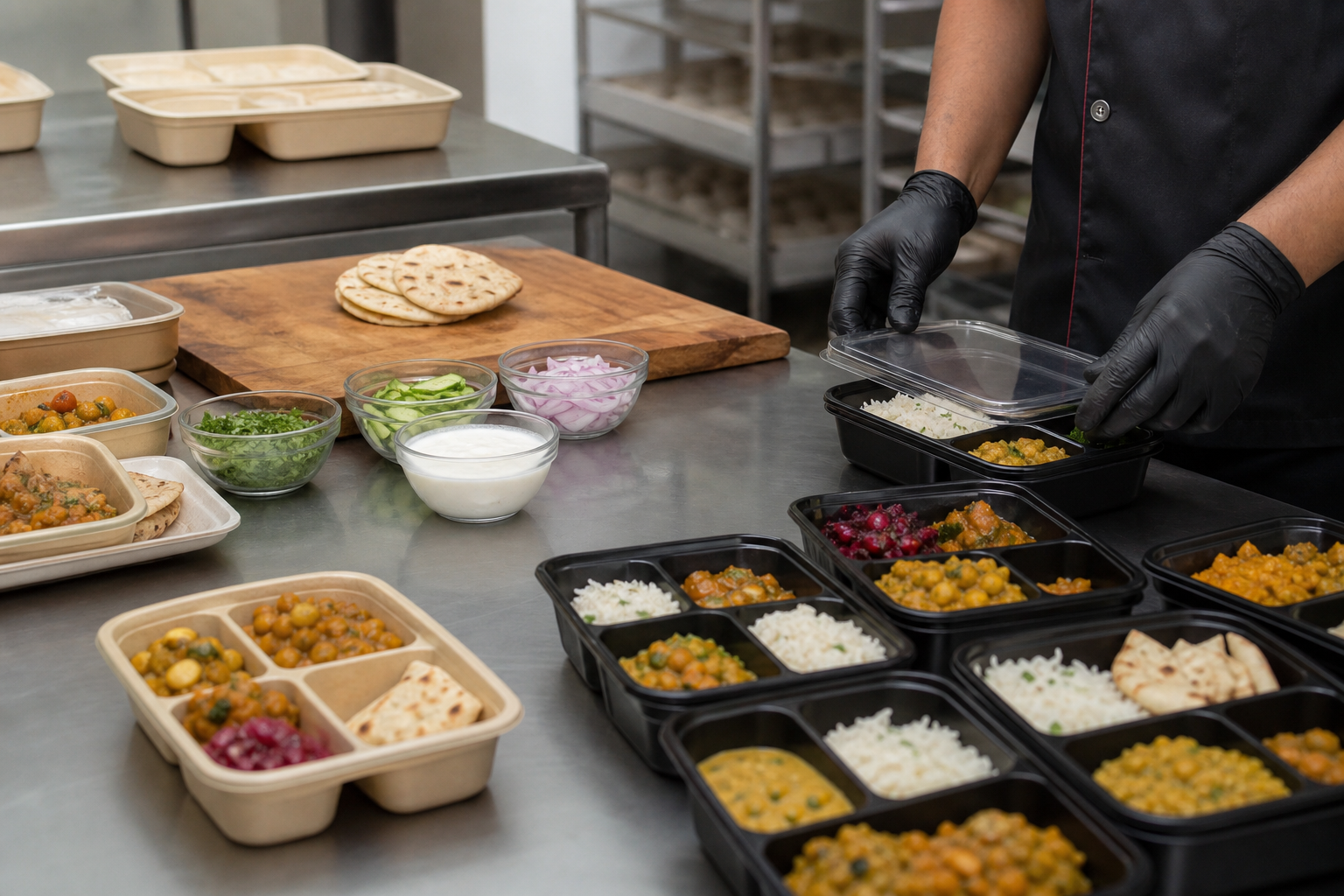
Boxed lunches make segregation easier, but you must still confirm process and documentation. Require a count per dietary group, an ingredients list for common allergens, and written notes describing cross-contact precautions. For life-threatening allergies, request the caterer’s cross-contact controls in writing and consider an extra precaution such as separate trays or on-site management of that guest’s meal.
Pre-sorted boxes by dietary type speed distribution and reduce errors. Always keep a point of contact available during delivery for last-minute clarifications.
Risk mitigation and exact questions to ask your caterer
Use precise vendor commitments to prevent failures such as late delivery, inaccurate orders, or missing serviceware. Recent review themes in corporate catering show order accuracy and delivery timing are frequent pain points, so insist on an order-verification checklist and a replacement policy. Have the caterer confirm these items in writing.
Questions to ask and confirm in writing:
- Will you provide an itemized written confirmation showing quantities by dietary type and a packing list?
- What is your arrival window, and who will be the on-site lead from your team?
- Do you label boxes with dietary tags and include an ingredients list for potential allergens?
- What is your replacement policy if items are missing or incorrect on delivery?
- Can you accommodate same-day orders and what is the latest cutoff for guaranteed fulfilment?
- Do you provide cutlery, napkins, condiments, and trash removal, or should we supply extras?
Request that the caterer include these commitments in the confirmation email so facilities and finance teams have a clear record.
Sample confirmation email you can adapt
Use this short template to request written commitments:
Subject: Catering confirmation for [Event name] on [Date]

Please confirm: menu choices, quantities by dietary type, delivery window [HH:MM–HH:MM], on-site lead[Name, phone], packing list (including cutlery and condiments), and replacement policy for missing or incorrect items. Parking/loading instructions: [details]. Thank you.

—[Your name], [Organisation]
GTA-specific checks and how Mehfill can help
If you are ordering boxed lunch catering for offices in the Greater Toronto Area, confirm the caterer’s service footprint and same-day policy. Mehfill Indian Cuisine serves Toronto, Peel, York, Durham, and Halton and may offer same-day catering where feasible. Verify building delivery rules such as loading dock access, elevator booking windows, and offloading hours before the delivery date to avoid delays. For local delivery planning best practices, see the Shawarma Moose corporate checklist for Toronto planners.
To request a quote, use Mehfill’s guided enquiry to provide your event date, guest count, dietary needs, and delivery instructions. See Mehfill’s catering menu for sample boxed lunches and items you may want to include in your confirmation.
Frequently asked questions
How many boxed lunches should I order per attendee for an office meeting?
Order one boxed lunch per attendee and add a small buffer to cover late additions. Common buffers are 3 extra boxes for small meetings, 5 extras for medium groups, or 3 to 5 percent for larger events. Specify final headcount and any extras in writing before the caterer confirms the order.
Can boxed lunch catering accommodate halal and other dietary restrictions reliably?
Yes, boxed lunches can accommodate halal, vegetarian, vegan, gluten-aware, dairy-free, Jain, and nut-aware needs when the caterer documents segregation and labelling. Ask for written confirmation of dietary counts, clearly labelled boxes, and the caterer’s cross-contact procedures. Keep a point of contact available during delivery for any questions.
What lead time do I need for same-day boxed lunch orders in the Greater Toronto Area?
Same-day availability depends on the caterer and the menu. Mehfill may offer same-day catering where feasible, but do not assume availability without written confirmation. Ask the caterer for their latest same-day cutoff and confirm logistics before relying on a same-day promise.
Should I choose boxed lunches or a buffet for a client-facing office event?
Choose boxed lunches when you need tidy, individual servings and fast distribution for a formal or client-facing setting. Buffets work better for casual team meals or events where guests prefer to choose portions and pass plates. For a side-by-side comparison of formats and trade-offs, see the Zerocater analysis of boxed lunches, buffet, and family-style formats.
What should I do if delivered boxed lunches are incomplete or incorrect?
Take photos of the delivered packing, notify the caterer immediately, and refer to the replacement policy you agreed in writing. Reputable caterers will prioritise fixing missing or incorrect items when you have provided a detailed packing list and clear point-of-contact instructions in advance.
Key takeaway: boxed lunch catering for offices reduces distribution friction and improves dietary segregation when you confirm menu details, labelling, arrival milestones, and an order verification process in writing. Collect your event details and request a quote through Mehfill Indian Cuisine to begin the guided enquiry.
Further reading and resources: Waiter.com: boxed lunch ordering tips, Zerocater: boxed lunch vs buffet, LunchLink: boxed lunches vs buffet, Shawarma Moose: Toronto delivery checklist.