
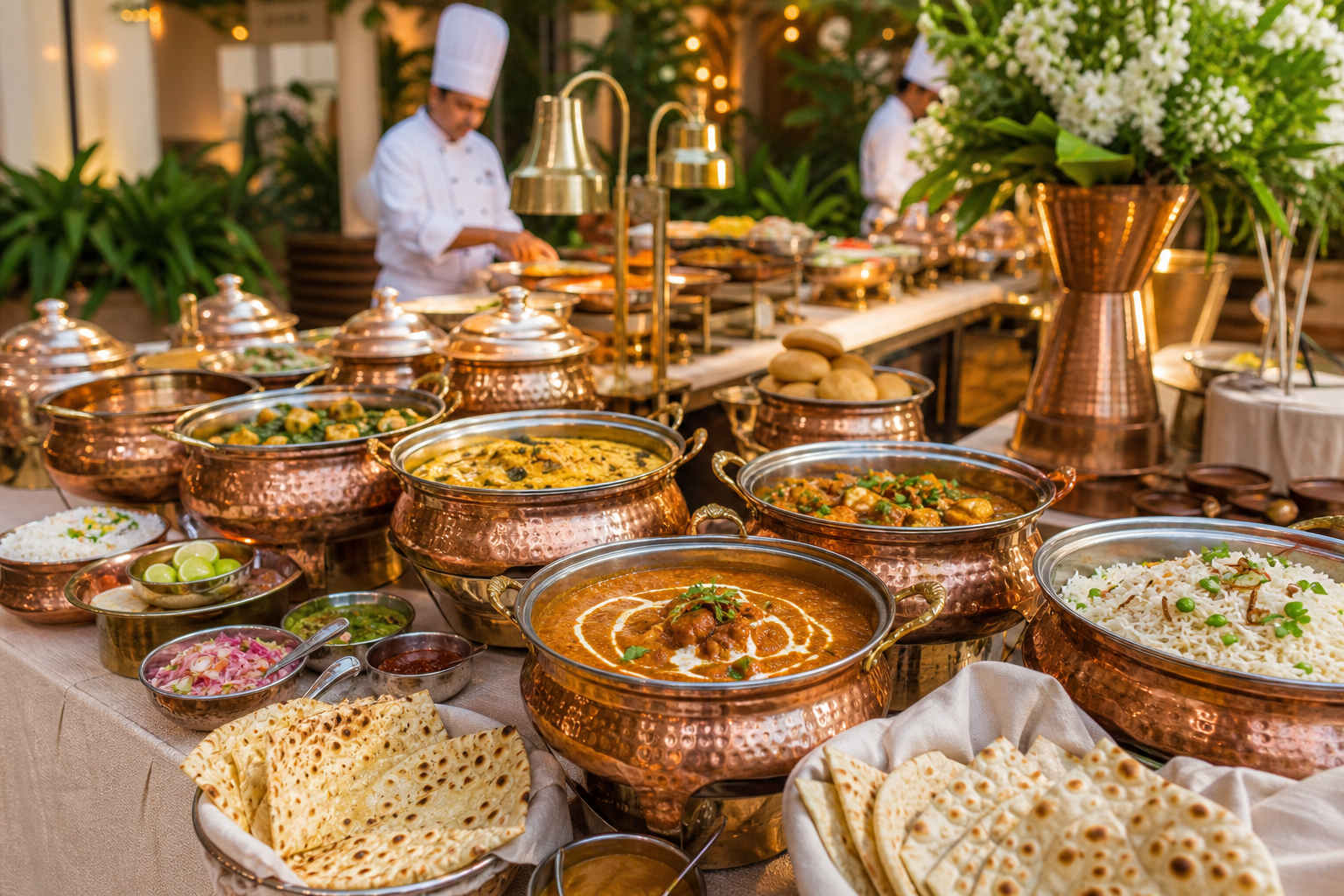
Who this Indian catering menu guide is for and what it delivers
This article is for hosts and planners across the Greater Toronto Area who need practical, event-ready Indian catering menus that work for buffets, boxed lunches, live stations and Indian BBQ. It offers seven numbered menu plans you can reuse or forward to a caterer, with clear dietary swaps, basic portioning advice and local logistics to speed confirmation. For local service examples, Mehfill Indian Cuisine lists buffet catering, boxed lunches, Indian BBQ and live stations and explains their guided enquiry process, delivery area and same-day options on their site Mehfill Indian Cuisine and the catering menu page Mehfill catering menu.
Seven practical menu plans you can reuse or send to a caterer
Below are seven reusable menu plans, each paired with the service format it suits best, common occasions, simple dietary substitutions and quick setup notes. Menu composition follows industry practice for inclusive Indian catering, combining rice, curries, a lentil or chickpea dish, vegetable sides, raita and bread so mixed groups are catered for efficiently (Zerocater). For party-style buffets that let guests sample multiple flavours, a mix of appetizers, curries, breads and rice is recommended (Tabla Catering). Use the numbered list as templates you can adapt for guest count, venue and dietary needs.
1. Buffet for mixed-diet events: the all-rounder menu
Best for wedding rehearsals, birthday parties, community events and large mixed groups. Core elements you can request: basmati rice or a simple pulao, two main curries (one vegetarian, one meat or paneer), a dal or chana masala for protein variety, a seasonal vegetable side, cucumber raita and a selection of breads such as naan and roti. This mirrors recommended corporate and group catering frameworks that balance variety with efficiency (Zerocater).
- Vegetarian swap: replace the meat curry with a hearty paneer or mixed vegetable curry.
- Vegan swap: offer coconut-based curries and a dairy-free raita alternative.
- Halal: specify halal proteins up front and request separate labelled trays for meat and veg.
Buffet layout note: keep vegetarian and vegan trays clearly labelled and place breads and condiments so cross-contact is minimised. For visual examples and setup ideas, see Mehfill's catering imagery and planning notes Mehfill catering menu and general buffet guidance (Tabla Catering).
2. Boxed lunches for corporate meetings: compact, inclusive picks
Ideal for office lunches, training days or conferences where seating and timing are tight. A reliable boxed-lunch formula includes one portioned main (choice of veg or meat), a measured serving of basmati rice or a small biryani, a fresh salad or raita, a piece of bread or wrap, a chutney packet and clear dietary labelling. Zerocater recommends this structure because it covers vegetarian, vegan, gluten-aware and dairy-aware needs while keeping service predictable (Zerocater).
- Label each box with the dietary category, for example vegetarian, vegan, halal or nut-aware.
- When to choose boxed lunches: limited serving space, staggered breaks, quick turnarounds or when you need individual portions for health or compliance reasons.
3. Live tandoor and chaat station for interactive receptions
Live stations add theatre to the meal: tandoori skewers, freshly made breads and assembled chaat bowls let guests watch preparation and customise spice levels. Typical station menus include tandoori chicken or paneer tikka, garlic naan made to order and a chaat station with papdi, sev and chutneys. Live counters need staff for steady throughput and venue approval for cooking equipment. For party-style staging and guest flow guidance, consult the party-catering reference (Tabla Catering) and Mehfill’s live station offerings Mehfill Indian Cuisine.
- Staffing and timing: schedule multiple servers or chefs for peak windows to avoid long lines.
- Venue approvals: confirm electricity, ventilation and fire regulations early.
4. Indian BBQ plan for outdoor celebrations and festivals
For park parties, patios and festivals, an Indian BBQ menu featuring grilled kebabs, tandoori fish or chicken, paneer tikka, a pilaf or jeera rice, salads and breads works well. Specify halal meat options if required and include vegetarian skewers so every guest can eat safely. Outdoor setups require permit checks and basic safety planning, and hosts should confirm whether open-flame grilling is permitted on site. Mehfill lists Indian BBQ among its live formats and can advise on outdoor equipment and staffing capacities (Mehfill Indian Cuisine).
5. Vegetarian-first wedding menu with timed service waves
Weddings benefit from a staged release: welcome bites on arrival, a main buffet or plated mains for the meal and a dessert or late-night snack wave. A vegetarian-first approach reduces cross-contact complexity while still allowing meat on request, and it simplifies plating and supply for large guest lists. Wedding menu planning that maps guest count, dietary needs, venue flow and timing is a recommended practice; local wedding caterers describe this timed-wave approach when planning multi-course events (The Mithai Maharaja).
- Example waves: welcome chaat and kebabs, main buffet with dal, two veg mains and one paneer, breads and rice, then dessert mithai or gulab jamun as a late snack.
- Timing tip: agree service windows with the venue and caterer so staff and food release align with speeches and rituals.
6. Jain and strict-diet menu plan with cross-contact controls
When guests follow Jain, strict vegetarian, gluten-aware or dairy-free diets, substitute root vegetables and avoid garlic and onion where required, use separate cookware and label items clearly. Ask the caterer to document the exact substitutions and to place separate serving utensils and trays to reduce cross-contact. Mehfill highlights inclusive dietary planning on its enquiry pages, and you should record these needs in the guided enquiry so they are confirmed before booking (Mehfill catering menu). For corporate events, Zerocater’s framework also stresses clear labelling and separate dishes to avoid surprises (Zerocater).
- Operational asks: request a written ingredient list, separate prep stations if possible and labelled trays at the buffet.
- Documentation: add diet specifics to your enquiry so the caterer can flag any items that need special handling.
7. Short-notice same-day template: reliable, low-setup choices
For same-day bookings choose items that can be pre-portioned and require minimal onsite cooking, for example boxed lunches, pre-plated biryani portions with a veg option, premade breads and a simple salad or raita. Confirm delivery ETA, packing completeness and whether the caterer can supply cutlery, napkins and warming trays. Mehfill offers same-day catering where feasible and uses a guided enquiry process to confirm scope, logistics and dietary needs quickly (Mehfill Indian Cuisine).
- Same-day confirmation checklist: final guest count, delivery address and access notes, dietary breakdown and a clear onsite contact for delivery.
- Tradeoff: faster turnaround reduces live elements and complexity, but you can still provide generous, labelled options for guests.
How to choose which of the seven plans fits your event
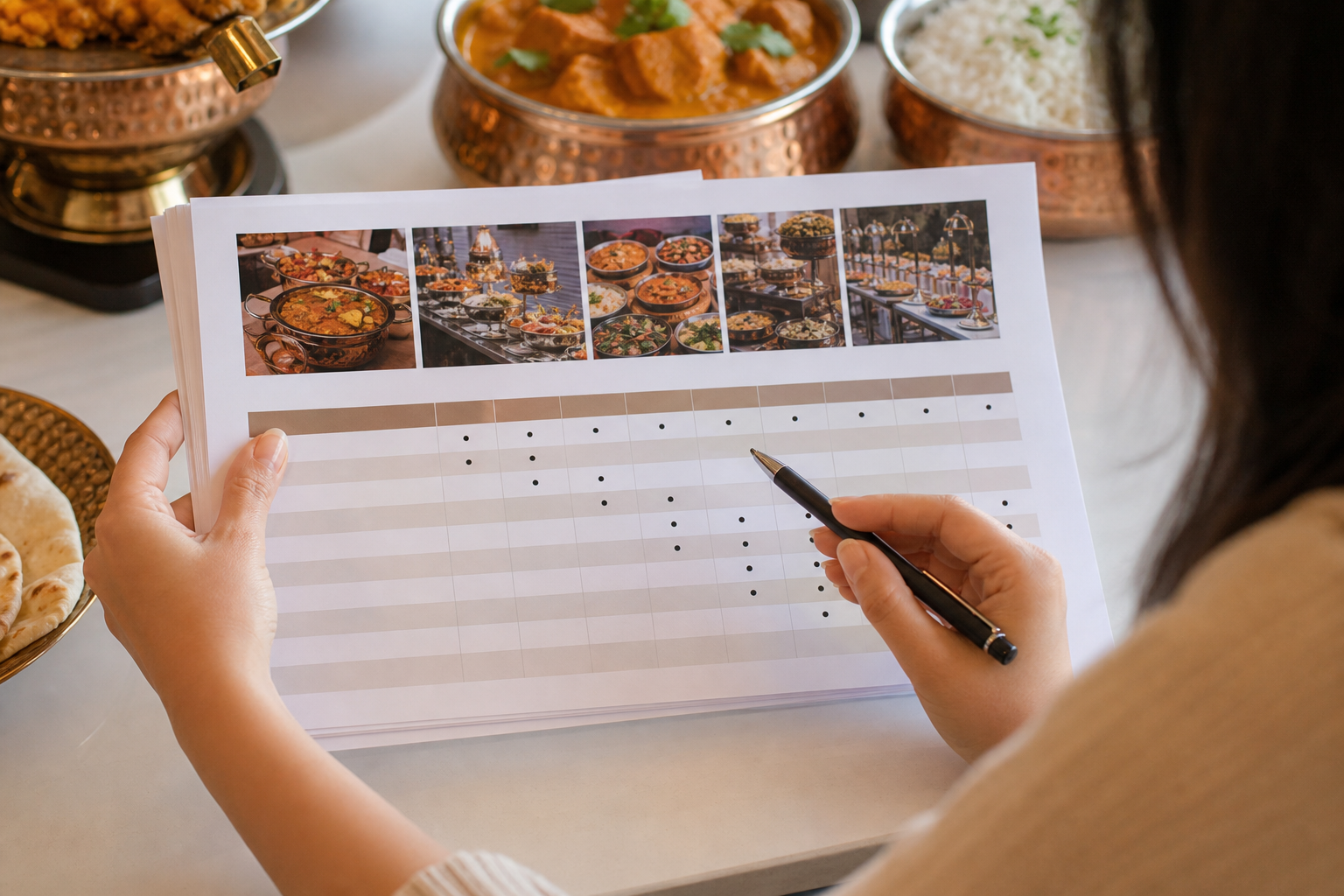
Compare plans using three criteria: guest profile, venue constraints and desired experience. Use this short decision grid: if guests are mostly office staff and time is tight, pick boxed lunches. If you want theatre and are outdoors or have a venue that supports live cooking, pick a live station or BBQ. If dietary variety is high and you can host a buffet, choose the mixed-diet buffet or vegetarian-first wedding plan. Wedding planning resources recommend mapping guest count, dietary needs and service timing as the primary step in choosing a plan (The Mithai Maharaja) and corporate guidance supports the rice-plus-two-curries template for balanced coverage (Zerocater).
Portion and quantity guidance to avoid waste or understaffing
Portioning is event specific, but these conservative principles reduce waste: plan one full main portion per guest for plated service, 0.8 portion per guest for buffet mains if you provide multiple mains, and one bread portion per guest. Always provide an explicit dietary headcount when enquiring so the caterer can issue a confirmed quote. Zerocater notes that rice plus two curries and a legume dish reliably covers mixed groups but should be adjusted by your caterer based on the confirmed guest count (Zerocater). Leave final portion confirmation to the caterer so they can account for service format and guest appetite.
GTA delivery, setup and same-day booking checklist
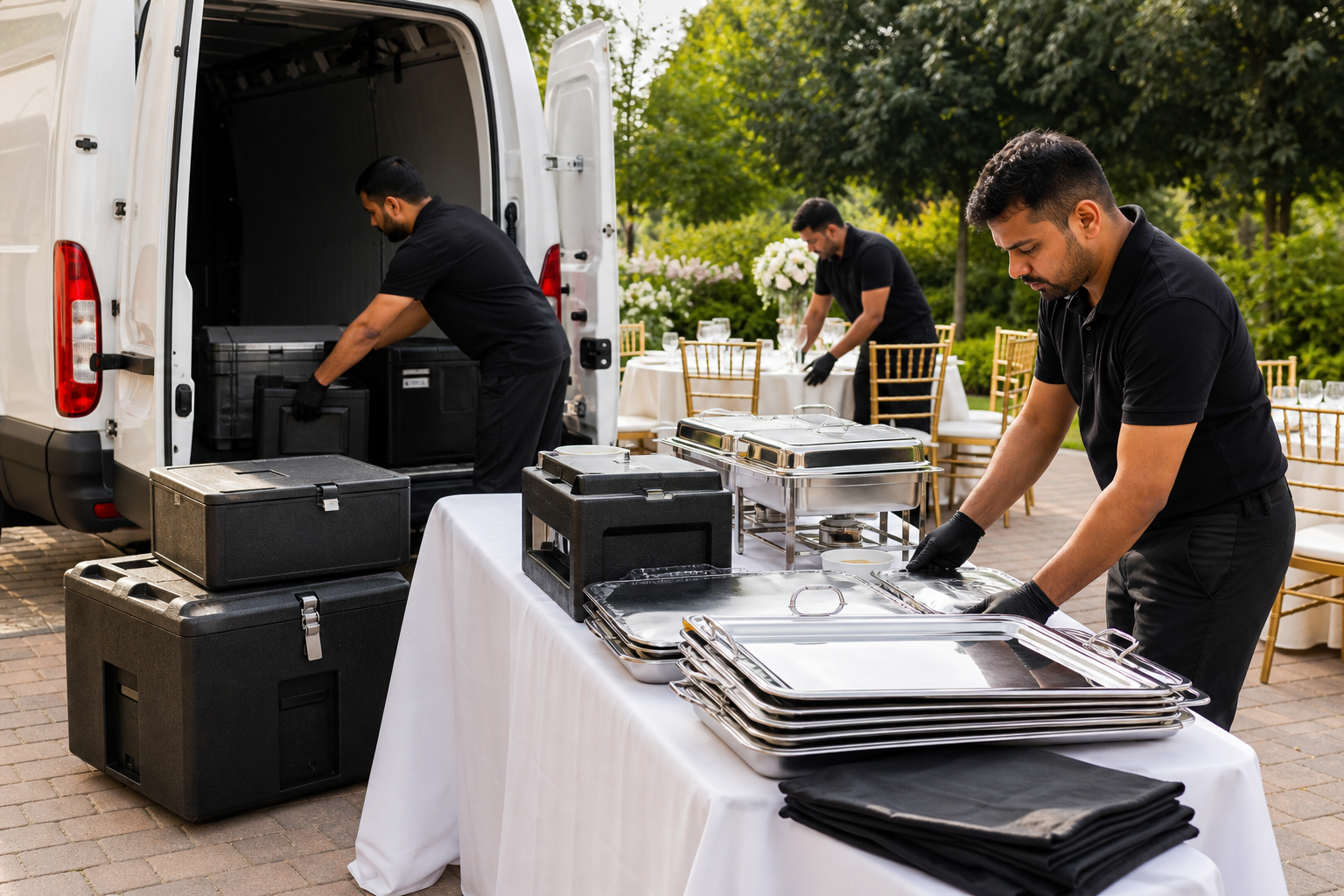
Confirm these items in the Greater Toronto Area before booking: venue loading zone and parking, access hours and elevators, service start and finish times, whether electrical or gas supply is available for live stations and whether the venue requires permits for open flame. Mehfill’s guided enquiry collects these details up front so they can return a customised plan that confirms availability, scope, logistics and commercial terms (Mehfill catering menu). For same-day requests, prioritise delivery address, guest count, dietary breakdown and an onsite contact to speed confirmation.
Common objections and simple mitigations hosts should insist on
Reviews and internal analysis underline two operational risks: order accuracy and delivery timing. Mitigation steps to include in the booking are straightforward: an itemised packing list, labelled trays for dietary categories, a confirmed ETA with time-stamped delivery, an onsite point person to accept delivery and a small replacement contingency for missing items. Mehfill documents a guided enquiry and confirmation flow to address logistics and dietary needs before booking (Mehfill Indian Cuisine). If you have high-sensitivity needs, ask for a written ingredient list and labelled serving stations.
What to include in your enquiry and how to confirm a booking
Send this checklist when you enquire with a caterer or use Mehfill’s enquiry path: event date and venue address, guest count and dietary breakdown, preferred service format (buffet, boxed, live or BBQ), service start and finish times, delivery and setup access notes, a budget range if you have one and the onsite contact name and phone. Mehfill’s guided enquiry process uses these items to produce a customised plan confirming availability, inclusions, staffing and terms (Mehfill catering menu). Expect a written confirmation that lists menu items, labelled dietary options and arrival ETA.
Frequently asked questions
How many curries and sides should I order for a mixed-diet buffet?
Order one rice, two curries (one vegetarian, one meat or paneer), a dal or chickpea dish, one vegetable side, raita and breads as a starting point. This composition is a commonly recommended framework for mixed groups and corporate events (Zerocater). Ask your caterer to adjust quantities based on your confirmed guest count.
Can a caterer guarantee no cross-contact for Jain, gluten-free, or nut-aware requests?
A caterer can minimise cross-contact by using separate prep areas, utensils, trays and clear labelling and by documenting ingredient lists. For absolute guarantees, discuss the level of control you need and request written acknowledgement in the booking. Mehfill asks for dietary details during its guided enquiry so those measures can be planned and confirmed (Mehfill catering menu).
What is the difference between a boxed lunch and a drop-off buffet for corporate events?
Boxed lunches are individually portioned and labelled, which is best for quick distribution and limited serving space. A drop-off buffet is better for variety and sampling but requires space for setup, warming equipment and sometimes staff for replenishment. Choose boxed when time and space are limited, and choose buffet when guest experience and variety are priorities (Zerocater).
How much lead time does Mehfill need for a staffed live station or Indian BBQ in the GTA?
Lead time varies by event complexity, but live stations and BBQs require more planning due to staffing, equipment and venue approvals. Mehfill’s guided enquiry captures venue and service requirements so they can confirm feasibility and provide a customised plan; contact them directly through their catering menu page to start the process (Mehfill catering menu).
What details should I include in a same-day catering enquiry to speed confirmation?
Provide event date and full address, exact guest count, dietary breakdown, preferred service format, delivery window and an onsite contact phone number. For same-day orders include whether you need cutlery and napkins and note any access constraints. Mehfill highlights same-day options when feasible and uses a guided enquiry to confirm scope quickly (Mehfill Indian Cuisine).
Ready to get a customised plan for your event? Start your enquiry with Mehfill Indian Cuisine and include the checklist above so they can confirm availability, menu options, dietary accommodations and logistics: Mehfill Indian Cuisine.