
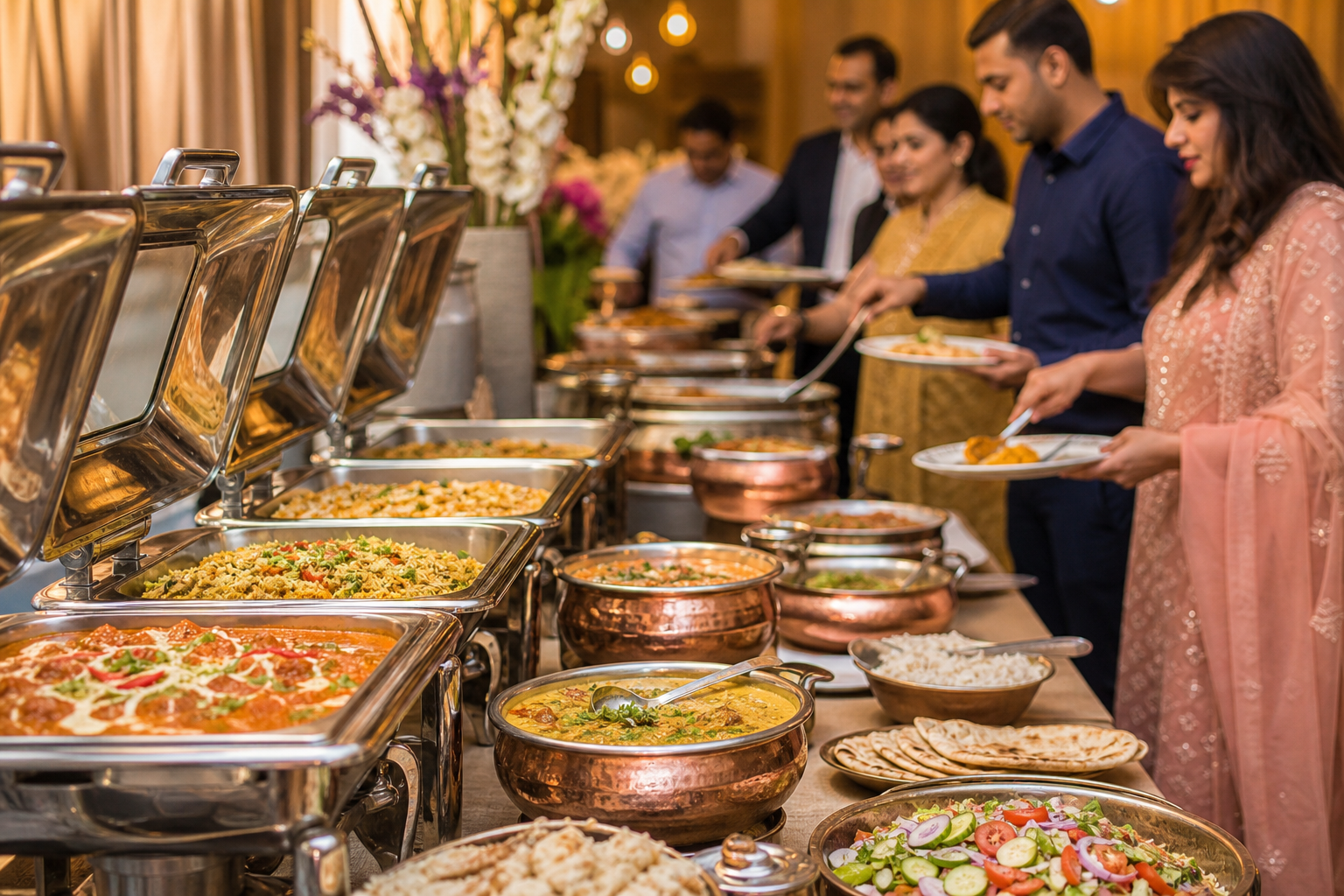
Planning a buffet for a wedding, corporate lunch, community festival, or memorial in the Greater Toronto Area means balancing taste, logistics, diet needs, and timing. Use these seven practical tips to create a simple decision plan you can share with your caterer. Each item includes a short rule or checklist you can copy into an enquiry, plus local considerations for GTA venues and traffic. Where useful, the guidance links to practical industry sources and to Mehfill Indian Cuisine for menu and enquiry steps.
1. Balance the menu for mixed diets and visual appeal
Build a three-track buffet so omnivores, vegetarians, and specialist-diet guests each have a clear main path. A reliable decision rule is to offer at least three proteins, two starches, and three vegetable or legume dishes for events over 75 guests. Keep plates fork-friendly where possible, and plan colour and height differences to make the line inviting. For presentation tips and fork-friendly menu ideas, see BBC Good Food.
Menu checklist
- Protein mix: at least one halal meat, one vegetarian protein, one plant-based protein.
- Starches: basmati rice or pilau and one bread option, with a gluten-aware alternative.
- Vegetable sides: two hot vegetable dishes and one cold salad or raita for contrast.
- Fork-only options: ensure at least half the dishes eat easily with a fork.
- Visuals: alternating colours and two height levels using risers.
Example Indian buffet that suits weddings and corporate lunches: chicken curry (halal), chana masala, butter paneer, vegetable pulao, garlic naan with a gluten-aware bread, mixed vegetable sabzi, and a simple cucumber-mint salad. Link your menu choices to your caterer’s menu when you request a quote so they can confirm substitutions and cross-contact controls. See Mehfill Indian Cuisine's catering menu for example options and to start an enquiry: the official website.
2. Use conservative portion rules and a quick quantity checklist
Conservative portioning avoids waste and the risk of running short. Use three per-person ranges when you request a quote: light servings for snack-style events, standard for sit-down lunches or dinners, and generous for celebrations with heavy eaters. Industry guidance recommends choosing the lower number in a serving range when there is any uncertainty, and remember that chafing dishes maintain heat but do not reheat cold food, so replenishment matters for quality and safety.
Quick quantity rule
- Light buffet: 0.5 to 0.6 lb per person total food equivalent.
- Standard buffet: 0.7 to 0.9 lb per person total food equivalent.
- Generous buffet: 1.0 lb per person total food equivalent.
Convert invited guests to expected eaters by applying an attendance factor. For corporate daytime events use 0.85, for weddings and milestone dinners use 0.95. For detailed portion planning and safe hot-hold practices, see the Caterpax quantity guide: How Much Food to Serve at your Event: The Complete Buffet Catering Quantity Guide — Caterpax.
3. Design service flow and staffing to prevent long lines
Bad queue management is the fastest way to ruin a buffet. Start by mapping guest flow and the time window for service. For a single buffet line, estimate guests served at 2 to 3 per minute. If you expect more than 120 guests per service wave, add a second line or a live station to keep throughput steady. For corporate events with short breaks, a plated or boxed option reduces pressure on schedule.
Staffing checklist
- Line attendants: one attendant per line for serving and replenishment for every 60 to 80 guests.
- Hot-hold and chafing maintenance: assign one staff to monitor temperatures and replace pans during long service.
- Guest support: one roving staff for dietary questions and dish labels for every 150 guests.
Shawarma Moose's corporate catering workflow explains why service style must match the event agenda. If you plan live Indian BBQ or a tandoor station, include staffed preparation time in your layout. See their notes at How to Order Catering for Corporate Events in Toronto | Shawarma Moose. Link the layout and staffing needs back to your caterer so they can confirm labour in the quote.
4. Plan hot holding, timing, and realistic GTA setup buffers
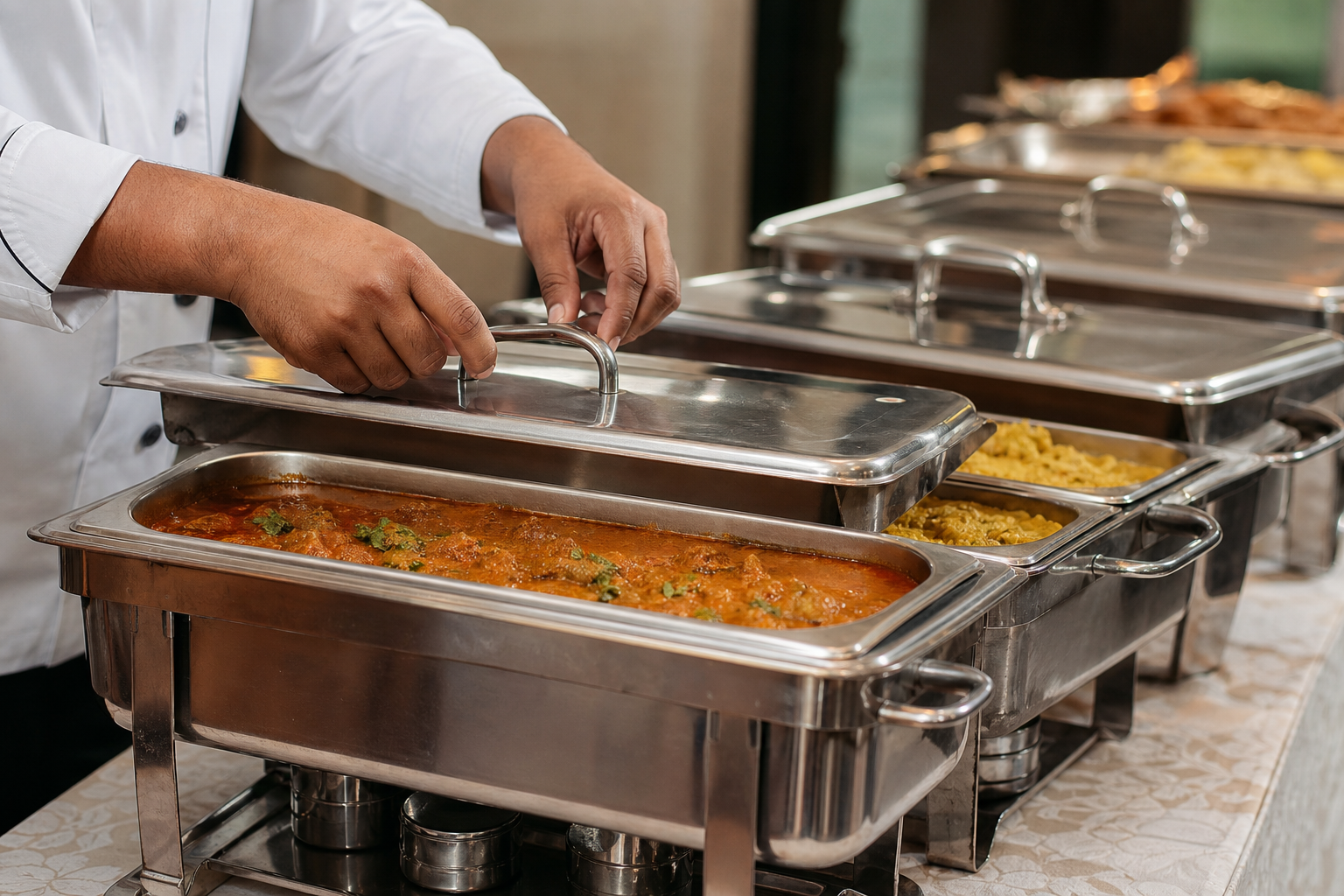
Allow generous setup windows for GTA traffic and venue constraints. A realistic delivery window is 60 to 90 minutes before service for large buffets when the venue has limited loading access or local congestion. In congested neighbourhoods add an extra 20 to 30 minutes for unloading and setup. Hot-holding is practical for only a few hours, and the chafing dish keeps food warm but will not reheat food that arrives cold. Plan a clear timeline and share it with your caterer and venue contact.
Sample event timeline to copy
- T minus 120 minutes: Caterer arrives for parking check and loading dock access confirmation.
- T minus 90 minutes: Unload and stage equipment.
- T minus 60 minutes: Begin hot-hold setup and line layout checks.
- T minus 15 minutes: Final temperature and presentation checks before guest arrival.
Local variables such as venue loading docks, streetcar routes, and rush-hour traffic affect these windows. Industry guides on planning and hot-hold timing can help when you set delivery expectations with your caterer. See FFT Caters for additional setup guidance.
5. Create clear dietary paths and cross-contact controls
On a single buffet tray mix, cross-contact risk grows. Create labelled dietary lanes so guests can make an obvious choice. Use clear signage and a colour-coded card system on serving spoons so staff and guests know which dishes are halal, vegetarian, vegan, gluten-aware, dairy-free, or nut-aware. Confirm these paths during your enquiry and ask the caterer for a written list of ingredients for any dishes critical to guests with allergies.
Dietary confirmation checklist
- Collect dietary needs with guest names where possible, or request a headcount per diet category.
- Request separate utensils and serving plates for allergy-sensitive dishes.
- Ask the caterer for documented cross-contact controls and ingredient lists for flagged dishes.
Mehfill Indian Cuisine advertises inclusive dietary planning that covers halal, vegetarian, vegan, Jain, gluten-aware, dairy-free, and nut-aware options, and confirms accommodations during the enquiry process. Use that documented baseline when asking for ingredient verification and service separation on your contract. Start here: Mehfill catering menu.
6. Pick the right service format: buffet, boxed, or live stations
Choose format by guest count, agenda, venue constraints, and the experience you want. Use this decision flow: if your agenda is tight or guests must eat at staggered times, choose boxed lunches. If the event is social and you want theatre, add a live Indian BBQ, tandoor, or chaat station. For straightforward feeding of large groups with limited staff, a buffet with guided replenishment is the practical choice.
Format decision criteria
- Choose boxed lunches for meetings with fixed seating and tight agendas.
- Choose buffet for flexible dining and mixed dietary audiences over 40 guests.
- Choose live stations for interactive experiences when the venue allows cooking or open flames, and when you can staff the station.
Mehfill offers buffet catering, boxed lunches, Indian BBQ, and live stations such as tandoor and chaat. Link your chosen format to the venue technical rules and ask the caterer to confirm whether permits or additional staffing are required. For a practical ordering workflow, see corporate planning notes at Shawarma Moose.
7. Reduce risk with order verification and onsite checks
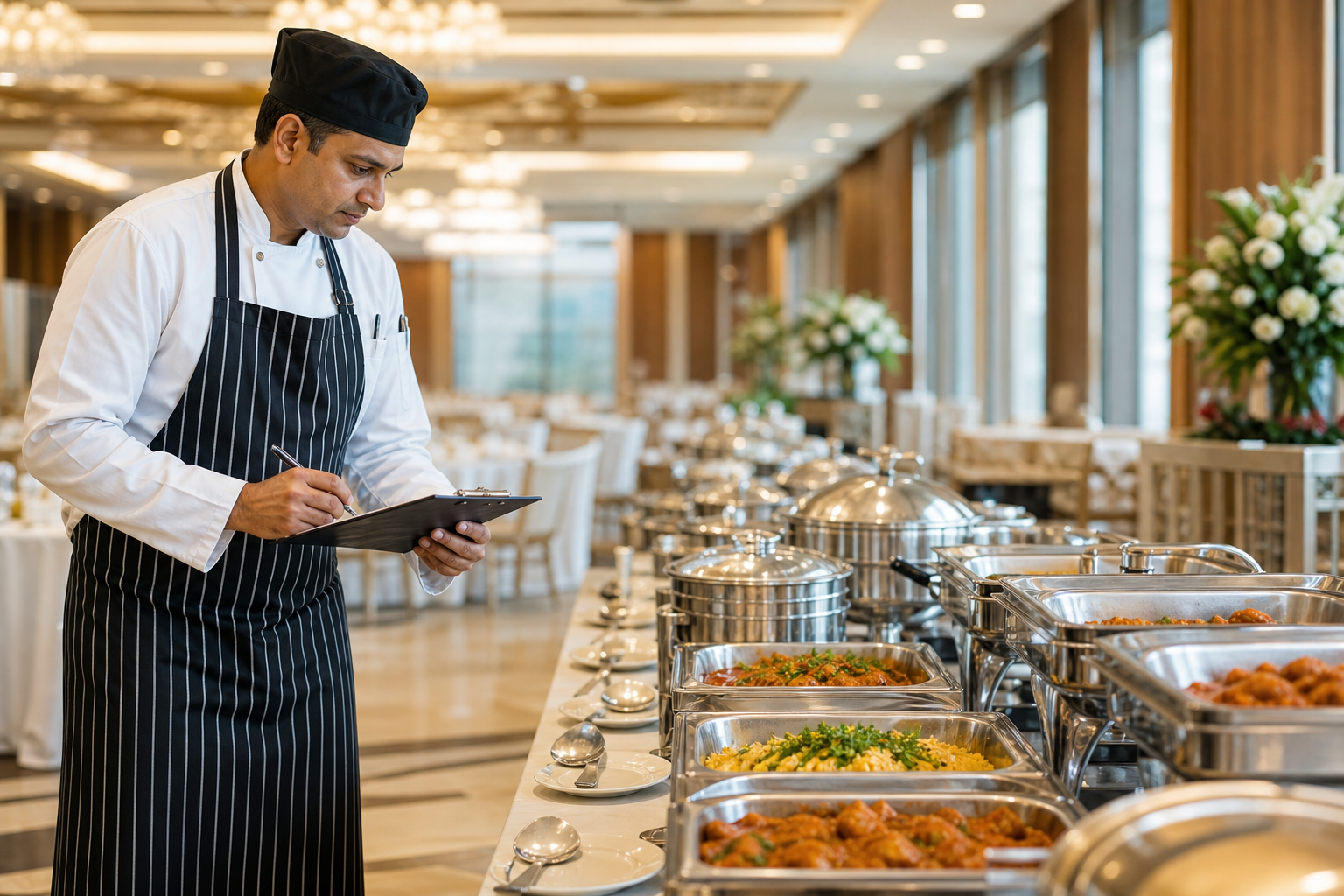
Operational issues in catering often come from missed confirmations and handoff errors. Reduce that risk with a short verification protocol you include in your confirmation email. This protocol should document the site contact and arrival window, guest counts by diet, final menu with ingredient notes, included service components, and an onsite manager request.
Verification protocol to use
- Send a confirmation email 72 hours before the event with guest counts and dietary totals.
- Request a packing checklist that lists every boxed meal or buffet tray and its diet label.
- Confirm site access, loading dock code, and the name and phone number of the venue contact.
- Ask for the name of the onsite manager so you can escalate quickly if needed.
Mehfill's customer review analysis highlights common operational concerns hosts raise, such as order accuracy and delivery timing. Including these verification steps in your booking reduces the chance of those issues affecting your event, and it gives your caterer clear instructions they can confirm in writing.
How Mehfill confirms your buffet quote and next steps
Mehfill Indian Cuisine follows an event-first enquiry process. Hosts provide occasion, date, venue, guest count, dietary needs, and service preferences. Mehfill shapes a customised menu and service plan, then confirms availability, scope, logistics, dietary accommodations, and commercial terms before booking. The kitchen offers buffet, boxed lunches, Indian BBQ, and staffed live experiences across the GTA, and same-day catering is available where feasible. To request a custom quote or review sample menus, start your enquiry on Mehfill's catering menu page: the official website.
Frequently asked questions
How much food should I order per person for a buffet?
Use a three-tier rule of thumb: light 0.5 to 0.6 lb per person, standard 0.7 to 0.9 lb, and generous up to 1.0 lb per person. When unsure choose the lower number in a serving range. For detailed quantity planning and hot-hold notes, see the Caterpax buffet quantity guide: How Much Food to Serve at your Event: The Complete Buffet Catering Quantity Guide — Caterpax.
Can a caterer handle mixed dietary requirements like halal, vegan, and gluten-aware on one buffet?
Yes, if you and the caterer create clear dietary paths, label dishes, use separate utensils, and document cross-contact controls. Ask the caterer to confirm ingredient lists and the specific measures they will use during setup. Mehfill documents inclusive dietary planning as part of the enquiry process.
Do caterers in the GTA offer same-day buffet catering and what should I expect?
Some caterers offer same-day service where feasible, but availability depends on date, guest count, and logistics. Expect shorter menu choices, a stricter delivery window, and possible labour surcharges. Mehfill indicates same-day catering is offered where feasible across the GTA; confirm availability when you enquire.
What does delivery and setup typically include for a buffet catering order?
Delivery and setup normally include transport of hot and cold items, chafing dishes and fuel, serving utensils, and basic plates and cutlery if agreed. Some caterers include staffing for replenishment and guest assistance. Confirm exactly which items and services are in the quote before you sign.
How can I reduce the risk of order mistakes or late delivery?
Use the verification protocol above. Ask for a written packing checklist, confirm the arrival window, provide venue access details, and request the name of the onsite manager. These steps make it easier to resolve issues quickly and protect your event schedule.
If you are ready to request a quote or review sample menus, start an enquiry with Mehfill Indian Cuisine: the official website